In factories, it is a daily task to move heavy equipment. This can mean that there may be a moment when part of a machine breaks, or even a mistake that hurts a worker. This task is carried out by two systems: air casters and conventional rollers. Each works in a rather different manner. Recognizing the distinction will assist you in determining which application to use in the facility. Suppliers of custom Air Casters – cargotrolley build systems for loads from one ton to over a hundred tons. Here is a clear comparison of both options.
How Air Casters Float Loads on Compressed Air
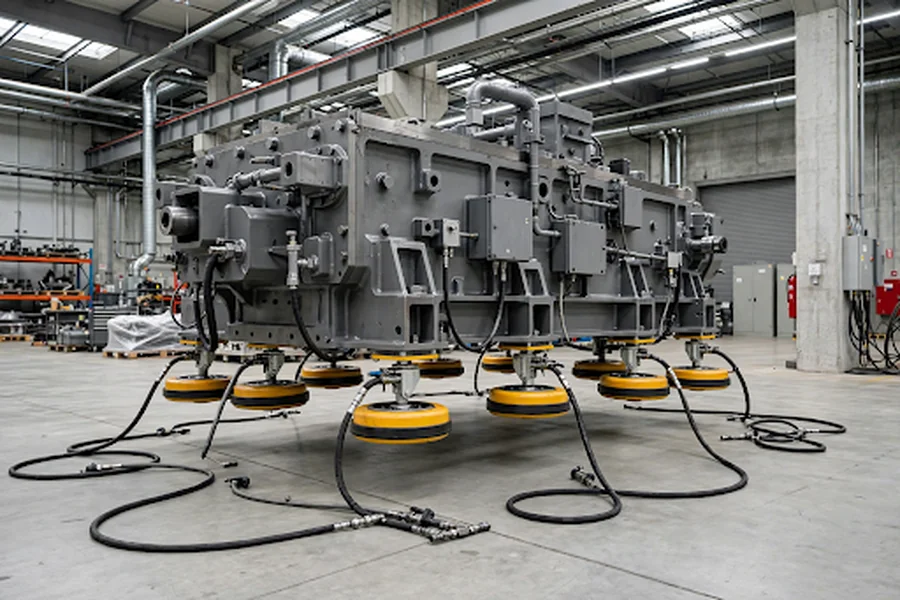
Air casters work on a very simple principle: a rubberized air cushion is placed under a load, which is capable of lifting something by about 0.1 millimeters. Air then escapes from the cushion to form an air film along its perimeter, which results in a considerable decrease in friction. Thanks to this technology, even a load weighing several tons can be easily moved by one person. Most of the actuators require 25 to 30 psi of air pressure to operate. The load rolls, and not slides, on the ground. The total absence of friction allows control of the load with just one person, which would otherwise require the help of a forklift.
Traditional Rollers and Their Limits
Rollers may be viewed as an earlier form of technology. They have rigid steel or nylon wheels placed under a frame. The user has to exert pressure on the equipment, which turns the wheels. It is perfect for short-distance movements on a flat surface. Still, it possesses a lot of disadvantages. It can only move along a straight line. When it comes to turning, it needs to be repositioned manually. Furthermore, one wheel supports the whole load through its small contact area. This leads to damaged surfaces. In addition, the equipment is useless on rough surfaces since it gets stuck or toppled.
Floor Protection Compared
In the process of establishing and fixing the ground there are expenses involved. The main source of these costs is the utilization of rollers. The device consists of a set of four steel wheels with a diameter of 300 mm, capable of carrying a great load of ten tons. The process is very slow, and it results in premature degradation of the concrete (flaking and cracking). When air casters are used, the same load is applied by means of big inflatable bags. As a result, the pressure at contact is lower than before. Hence the reason why tiled, epoxied, and polished floors last longer than expected. Nevertheless, the use of a flat floor cannot be overlooked. Any cracks and uneven sites will cause the failure of air sealing. Preparatory work has to be conducted prior to employing air.
Maneuverability in Tight Production Areas
The workplace is filled with various individuals. Machinery is organized with very small pathways between them. Maneuvering is difficult. In order to change direction, the operator is required to pick up, stop, and start the skates again. This process is too long and dangerous, as the load might tumble down. The use of air casters allows the operator to move machines either forward or backward, and the only movement that is necessary is a lateral movement. The operator is able to spin the equipment with the help of friction. The accuracy of positioning is very high, only a few millimeters. This is crucial when placing a punch press to a feeding line or lowering a CNC to anchors. This high level of precision helps move machines under low ceilings without the use of a crane.
Load Capacity and Long-Term Cost
Roller sets are inexpensive to get. The price of a normal mechanical roller kit is much less than that of an air caster kit with its air supply. But the price is only part of the story. Air caster systems are flexible and can grow. Adding modules is easy and increases the capacity without reengineering. One air system can be utilized by numerous machines in the company for years. Using rollers is harmful to the floors and creates hidden costs that may include repairing a damaged bay, which may prove to cost more than the air system itself. Labor expenses are another issue; due to air technology, the number of employees needed decreases from five to one or two. Companies that often change positions of their equipment will benefit from this investment quickly.
Picking the Right System for Your Facility
The answer depends on the loads and the type of floor. Rollers are beneficial if the moves are rare, short, and complex. A small investment is adequate to solve the continued work of a task. Air casters are the most suitable equipment when the work has to be done on a frequent basis or when the load is fragile. Air casters are non-damaging, labor-saving, and very precise in placing the load. More than one manufacturer has encountered this issue and faces the consequences of this approach both outdoors and indoors. The improvised area outdoors can clearly be turned into a workshop with the use of the air devices.