- Key Takeaways
- Start With the Kitchen’s Layout and Architecture
- Compare Common Cabinet Door Styles
- Shaker and Slim Shaker
- Raised Panel and Flat Panel
- Glass Fronts and Mixed Profiles
- Pick a Color Based on Light and Room Size
- Choose a Finish for Everyday Life
- Use Inspiration Without Creating a Dated Kitchen
- Match Hardware With the Cabinet Profile
- Balance Style With Storage and Function
- Make a Simple Cabinet Comparison List
- Test Samples Before Ordering
- Conclusion
Key Takeaways
- Cabinet door style establishes much of a kitchen’s visual character.
- Color and finish should be evaluated in the home’s actual daylight and evening lighting.
- Simple, well-proportioned cabinet profiles are easier to pair with future updates.
- Storage, cleaning needs, and hardware matter as much as the cabinet’s appearance.
- Full-size samples help prevent costly color and finish surprises.
Cabinets occupy a large share of the visible surface area in a kitchen, so they influence nearly every other design decision, from countertops and backsplashes to flooring and fixtures. For homeowners comparing high-quality cabinets in Salt Lake City, the best choice is usually one that feels right for the home, supports daily routines, and remains appealing even as smaller decorative details change. Salt Lake City kitchens often need to work across bright, dry daylight, snowy winter conditions, and long stretches of indoor living. A cabinet color that looks crisp beside a showroom window can feel cooler or darker in a north-facing kitchen, while a rich wood tone may look entirely different in an open-plan room with strong afternoon sun. Planning around the room itself is more reliable than choosing solely by a trend photo.
Start With the Kitchen’s Layout and Architecture
Before comparing door colors, look at the fixed elements of the space. Note ceiling height, window placement, wall length, flooring, and the sightlines from adjacent living or dining areas. In a compact galley kitchen, light cabinetry can reduce visual heaviness. In a larger kitchen with ample natural light, a darker island or pantry wall may add definition without making the room feel closed in. Also consider the home’s architectural language. Traditional trim, arched openings, and detailed millwork often pair naturally with more dimensional door styles. Clean-lined newer homes may suit flat-panel or slim Shaker doors. Transitional spaces can bridge both directions by using an uncomplicated profile, warmer finishes, and more classic hardware.
Compare Common Cabinet Door Styles
Shaker and Slim Shaker
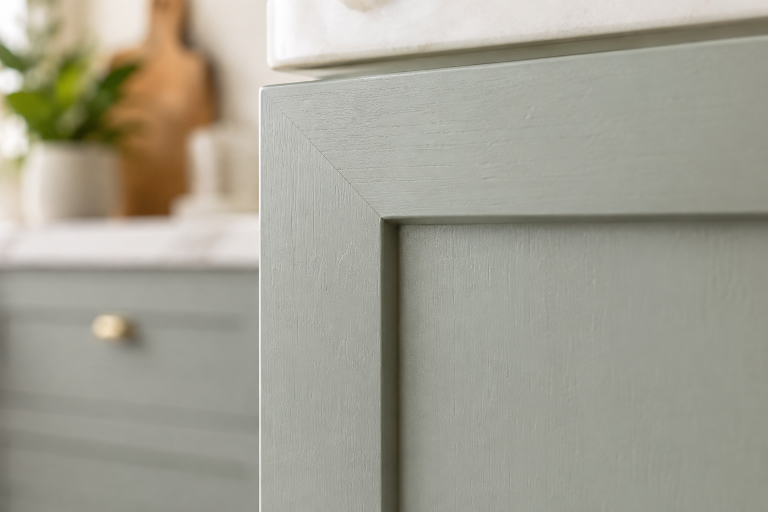
Shaker doors use a frame-and-panel construction that can work in traditional, farmhouse, transitional, and contemporary kitchens. Slim Shaker versions reduce the width of the frame, creating a quieter look while still offering more depth than a flat door. Both options can be paired with many colors, countertops, and hardware styles.
Raised Panel and Flat Panel
Raised-panel doors add shadow lines and decorative depth, making them a natural fit for more traditional interiors. Flat-panel doors have a smooth, simple face and work well in modern or minimalist kitchens. For a useful overview of how doors, drawers, cabinet boxes, and hardware fit together, review kitchen cabinet basics on Wikipedia before comparing quotes.
Glass Fronts and Mixed Profiles
Glass-front doors can lighten a cabinet run and provide a place to display dishes or glassware, but their contents remain visible. Use them selectively, such as on an upper cabinet near a dining area. Mixing door styles can also work, particularly when one profile is reserved for an island, beverage station, or hutch-style feature. Keep the change intentional and limited.
Pick a Color Based on Light and Room Size
View cabinet samples next to the countertop, backsplash, flooring, and wall paint. Whites can lean warm or cool, grays may read blue or beige, and wood finishes can bring out unexpected tones in nearby materials. Check samples in morning, afternoon, and evening light, then turn on the kitchen’s planned artificial lighting before deciding. Lighter finishes can help a smaller room feel more open, while dark finishes can create contrast and visual weight. Neither approach is automatically better. The goal is to balance the room’s size, available light, and the amount of dark material already present in the floor, counters, or appliances.
Choose a Finish for Everyday Life
Painted cabinets offer a broad range of solid colors and a uniform appearance. Stained finishes allow wood grain and natural variation to remain visible. Textured or grain-forward surfaces can add warmth, though pronounced texture and detailed grooves may require more careful cleaning near the cooktop and sink. Ask exactly how the selected finish should be cleaned, what products should be avoided, and whether touch-up materials are available. High-contact areas, including trash pullouts, drawer fronts, and cabinets beside cooking zones, deserve special attention. A practical finish is one that the household can maintain comfortably, not just one that looks good on installation day.
Use Inspiration Without Creating a Dated Kitchen
Soft neutrals, natural wood tones, muted greens and blues, and cleaner door profiles can all be used thoughtfully in a Salt Lake City kitchen. The lasting approach is to reserve the strongest color or most distinctive finish for a smaller zone, such as an island or pantry wall, while keeping the main cabinet run more adaptable. Current guidance on choosing cabinets based on layout, storage, style, and budget can help homeowners prioritize decisions that are difficult to change later. Cabinet boxes, door profiles, and countertop selections tend to stay in place for years. Hardware, wall paint, pendant lights, and stools are generally easier to update. Put long-term value into the major surfaces, then use the smaller details to express personality.
Match Hardware With the Cabinet Profile
Hardware can noticeably change the character of the same cabinet door. Small knobs may feel traditional and understated, while long bar pulls can emphasize a streamlined design. Cup pulls offer a familiar classic look, and edge pulls can keep flat-panel cabinetry visually minimal. Test hardware in person when possible, especially on wide drawers and heavy pullouts. Choose pieces that are comfortable to grip and easy to clean. A coordinated mix of knobs on doors and pulls on drawers can provide practical access without making the kitchen feel overly busy.
Balance Style With Storage and Function
Attractive cabinet fronts cannot fix inconvenient storage. Plan deep drawers for cookware, vertical dividers for baking sheets, pull-out shelves for pantry items, and accessible recycling or waste storage where those tasks happen. Consider who cooks in the kitchen, how often groceries are stored in bulk, and where small appliances will live.
Make a Simple Cabinet Comparison List
- Style: Does the door profile suit the home’s trim, flooring, and overall character?
- Color: Has the sample been viewed in daylight and under evening lighting?
- Finish: Will it handle fingerprints, moisture, grease, and routine cleaning?
- Storage: Do drawer sizes, pantry access, and corner solutions support daily habits?
- Flexibility: Can future updates be made with paint, hardware, or lighting rather than replacing cabinets?
Test Samples Before Ordering
- Bring home full-size door or finish samples when available.
- Place them beside counters, backsplash materials, flooring, and wall paint.
- Inspect them at different times of day and with the planned light fixtures on.
- Feel the surface, edges, and door profile, then compare how easily each option can be cleaned.
- Ask about materials, finish care, replacement parts, trim, delivery, installation, and what the estimate includes.
Conclusion
The best cabinet plan for a Salt Lake City home is not necessarily the boldest one. It is the plan that fits the architecture, performs well in the room’s changing light, supports cooking and storage routines, and remains easy to maintain. Homeowners should also consider the kitchen’s layout, available space, flooring, countertops, backsplash, appliances, and surrounding finishes before making a final cabinet decision. Natural and artificial lighting can affect how colors and finishes appear throughout the day, so viewing samples in the actual kitchen can provide a more useful reference than relying on showroom lighting alone. By evaluating style, color, finish, hardware, storage needs, and function as a single, cohesive decision, homeowners can create a kitchen that feels current in 2026 while remaining practical, comfortable, and useful for years to come.