- Key Takeaways
- Table Of Contents
- 1. Why The Consumption Method Matters
- 2. How Inhaled Cannabis Works
- 3. How Edibles And Drinks Work
- 4. Other Methods To Consider
- 5. Comparing Onset Times And Duration
- 6. How To Choose A Method
- 7. Simple Steps For A More Careful First Experience
- 8. Common Mistakes To Avoid
- 9. Health, Safety, And Legal Questions
- 10. Frequently Asked Questions
- Which Cannabis Method Works The Fastest?
- Why Do Edibles Take So Long To Work?
- Can You Take More If The First Amount Does Not Work?
- What Should Someone Do If The Effects Feel Too Strong?
- Conclusion
Key Takeaways
- Different cannabis methods can change how quickly effects begin, how strong they feel, and how long they last.
- Inhaled products usually act faster, while edibles and drinks can take longer to begin and may last longer.
- First-time consumers should choose low-THC options, start with a small amount, and wait before using more.
- Labels, serving sizes, food intake, medications, and other substances can all affect the experience.
- Responsible use includes safe storage, avoiding impaired driving, and asking a healthcare professional about personal health concerns.
Table Of Contents
- Why The Consumption Method Matters
- How Inhaled Cannabis Works
- How Edibles And Drinks Work
- Other Methods To Consider
- Comparing Onset Times And Duration
- How To Choose A Method
- Simple Steps For A More Careful First Experience
- Common Mistakes To Avoid
- Health, Safety, And Legal Questions
- Frequently Asked Questions
- Conclusion
Your first dispensary visit can feel less intimidating when you understand the basics before you arrive. A practical starting point is https://cityleaves.com/cannabis-101/, which introduces common cannabis terms, product formats, and the difference between THC and CBD.
There is no single cannabis product that is right for every beginner. Your experience can depend on the product’s THC content, the amount you use, how you consume it, your comfort level, whether you have eaten, and individual factors such as prior cannabis experience.
1. Why The Consumption Method Matters
The same amount of THC can feel very different depending on how it enters the body. Inhaled products reach the bloodstream quickly, while swallowed products must move through digestion first. That difference affects how long you should wait before deciding whether you want more, and how much time you should leave open in your schedule.
Product labels are useful for comparing THC per serving and total THC per package, but they cannot predict every person’s response. Your reaction may also vary from one day to another, especially when food, alcohol, medications, stress, or fatigue are involved.
2. How Inhaled Cannabis Works
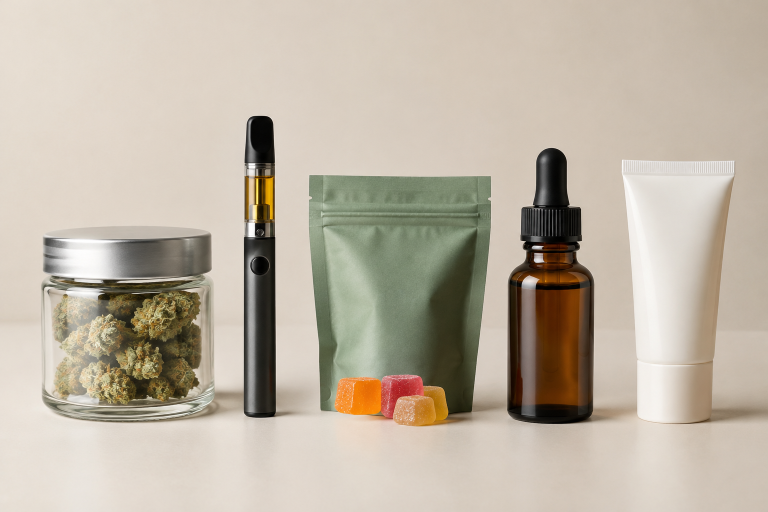
Smoking flower and using a vape are inhaled methods. Effects may begin within minutes, so a person can pause and notice how they feel before taking another inhalation. Flower is the dried cannabis plant, vape products use cannabis oil, and concentrates are highly potent extracts that generally require greater caution.
High-THC products may increase impairment and the chance of unpleasant effects, including anxiety or dizziness. Take a small inhalation, wait, and avoid repeated use in a short period. Current route-of-use research also recognizes that smoking, vaping, eating, and dabbing can involve different health considerations.
3. How Edibles And Drinks Work
Edibles and cannabis drinks are swallowed, which means effects can take longer to appear. Onset may range from about 30 minutes to several hours, and the effects can last longer than those from inhalation. A full or empty stomach may also affect timing.
For example, someone might take an edible, feel nothing after 20 minutes, and take another serving. The first serving may still be building. Reading the serving size, checking the milligrams of THC, and waiting through the product’s expected onset window can help prevent an unexpectedly intense experience.
4. Other Methods To Consider
- Sublingual products: Tinctures or dissolvable products are placed under the tongue and may act sooner than products that are swallowed.
- Capsules: These offer measured portions but typically follow a slower, edible-like timeline.
- Beverages: Their familiar format can make them approachable, but each bottle or can may contain more than one serving.
- Topicals: Creams and balms are applied to the skin and are commonly used for localized application. Follow the label and watch for irritation.
- Concentrates: These products can contain high levels of THC and may not be an ideal first choice.
5. Comparing Onset Times And Duration
These are general planning ranges, not guarantees:
- Inhalation: Effects can begin within minutes and often last a few hours. Wait before taking another inhalation.
- Edibles and drinks: Effects may begin in 30 minutes to several hours and can last several hours or longer. Do not assume the first serving failed.
- Sublingual products: They may begin sooner than swallowed products and can last for several hours. Follow the package directions.
- Topicals: Timing varies by product, and effects are generally focused on the area of application.
6. How To Choose A Method
- Decide whether you prefer a faster or slower onset.
- Consider how long you can comfortably set aside for the experience.
- Review THC per serving, not just the package’s total THC amount.
- Check ingredients for allergens or added stimulants.
- Choose a calm, familiar setting for a first experience.
- Ask a dispensary professional about product formats and ask a healthcare professional about medical or medication concerns.
7. Simple Steps For A More Careful First Experience
- Read the entire label before opening the product.
- Confirm the THC amount in one serving.
- Start with a small amount, especially with edibles.
- Wait long enough to assess the first amount before taking more.
- Keep water nearby and avoid alcohol or other substances.
- Do not drive, bike, swim, or operate machinery while impaired.
- Store products in their original child-resistant packaging, out of reach of children and pets.
Government safer-use guidance similarly emphasizes patience with oral products, avoiding mixing substances, and keeping cannabis securely stored.
8. Common Mistakes To Avoid
New consumers often run into trouble by taking more before the first dose has had time to work. Other avoidable mistakes include choosing a high-THC concentrate, overlooking serving sizes, mixing cannabis with alcohol, assuming every product will feel the same, or driving because the effects seem mild. Treat edibles with particular care because they can resemble ordinary snacks or drinks.
9. Health, Safety, And Legal Questions
Cannabis laws, age limits, possession rules, public-use restrictions, and transportation rules differ by location and can change. Check the current rules where you live before purchasing or carrying a product. Cannabis can cause impairment, drowsiness, dizziness, anxiety, confusion, and reduced coordination in some people.
People who are pregnant, under the legal age, managing heart or mental health conditions, or taking prescription medications should speak with a qualified healthcare professional before using cannabis.
10. Frequently Asked Questions
Which Cannabis Method Works The Fastest?
Inhaled methods generally begin working faster than swallowed products. The exact timing varies by product and person.
Why Do Edibles Take So Long To Work?
Edibles must move through digestion before their effects are felt. Food, metabolism, and the product itself can affect the delay.
Can You Take More If The First Amount Does Not Work?
Wait until the expected onset window has passed. Taking more too soon can create a stronger and longer-lasting experience than intended.
What Should Someone Do If The Effects Feel Too Strong?
Move to a quiet place, avoid additional substances, drink water, and ask a trusted person for support. Seek urgent medical help for trouble breathing, loss of consciousness, severe confusion, or other serious symptoms.
Conclusion
A successful first dispensary visit is not about finding one perfect product. It is about choosing a method that fits your schedule and comfort level, checking the label carefully, starting small, and giving the effects time to develop. Patience and responsible planning can make the experience more manageable.