- Table of Contents
- Why Indoor-Outdoor Living Works in Austin
- Start With Everyday Purpose
- Questions to Ask First
- Create Clear Activity Zones
- Useful Zones to Consider
- Connect Indoor and Outdoor Areas
- Choose Comfortable, Durable Furniture
- Use Color and Texture for Flow
- Plan for Austin Weather
- Layer the Lighting
- Keep Maintenance Simple
- Build the Space in Stages
- Common Questions
- How can a small Austin patio feel more comfortable?
- What makes an outdoor area feel like a room?
- Should indoor and outdoor furniture match exactly?
- Final Thoughts
Table of Contents
- Why Indoor-Outdoor Living Works in Austin
- Start With Everyday Purpose
- Create Clear Activity Zones
- Connect Indoor and Outdoor Areas
- Choose Comfortable, Durable Furniture
- Use Color and Texture for Flow
- Plan for Austin Weather
- Layer the Lighting
- Keep Maintenance Simple
- Build the Space in Stages
- Common Questions
- Final Thoughts
In Austin, a patio, covered porch, balcony, or courtyard can become one of the most enjoyable parts of the home. With long warm seasons, bright sun, sudden rain, and evenings made for gathering, the best spaces are designed for real routines rather than occasional photographs. Thoughtful layouts and luxury furniture in Austin, TX, can help create an outdoor area that feels as welcoming as the rooms inside.
The goal is not to fill every open corner. It is to make the space comfortable enough for morning coffee, family meals, relaxed weekends, remote work, or casual visits with friends. When function leads the process, style has a natural place to follow.
Why Indoor-Outdoor Living Works in Austin
Outdoor areas can make a home feel more flexible without changing its footprint. Recent outdoor design coverage has emphasized patios and gardens that support several parts of the day, from quiet mornings to evening entertaining, instead of serving as unused backdrops. This shift toward purposeful spaces reflects emerging 2026 design trends focused on personalized, functional exterior areas.
For Austin homes, that flexibility matters especially given the city’s unique climate and geography. A shaded seating area can make a sunny backyard more usable during the intense Texas summers, while a small balcony can become a welcome retreat when it is arranged around one clear purpose. Comfort should come before decoration, especially when heat, glare, wind, and storage needs influence how often the area is used.
Start With Everyday Purpose
Before measuring furniture or choosing pillows, consider how the household will use the area most often. A space intended for quiet reading needs something different than one built around weekend grilling, neighborhood gatherings, or family dinners. Write down the two or three activities that matter most, then plan around those needs.
Questions to Ask First
- Will the main activity be dining, lounging, working, or a mix of all three?
- How many people should fit comfortably on an ordinary day?
- Will children or pets need open floor space?
- Which time of day will the space get the most use?
- Where do sun, shade, wind, and water collect around the area?
Create Clear Activity Zones
Defined zones make an outdoor space easier to use and easier to keep orderly. A compact Austin patio may work best with a dining spot near the kitchen, a comfortable seating group farther from the door, and a small service area for a grill or drink tray. For homeowners looking at high end furniture in Austin, TX, choosing fewer well-scaled pieces can create a more inviting result than crowding the patio with too many items.
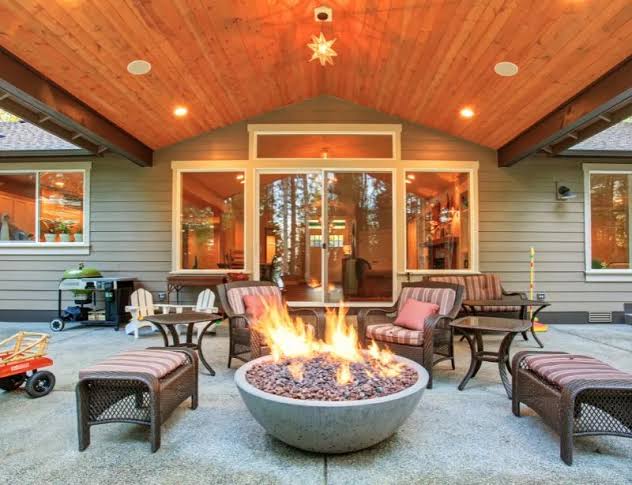
Photorealistic candid lifestyle photo of an Austin home patio with comfortable outdoor seating, a small dining area, natural greenery, and shade from a covered porch; a person casually enjoying coffee in the background, warm natural light, slightly imperfect documentary-style composition, no posing.
Useful Zones to Consider
- Dining zone: Keep it close to food preparation and leave room for chairs to pull out.
- Lounge zone: Use deeper seating for conversation, reading, and unhurried evenings.
- Quiet zone: A single chair, side table, and planter can define a peaceful morning-coffee corner.
- Service zone: Place storage, serving surfaces, coolers, or grilling tools where they are useful but out of the main path.
Connect Indoor and Outdoor Areas
The indoor-outdoor transition feels smoother when the two spaces share a few visual cues. Repeat a color from the living room in outdoor cushions, use related wood tones or metal finishes, and keep the route from the door open. Rugs, planters, and lighting can help signal that the patio is an extension of the home rather than a separate leftover area.
Pay attention to practical details as well. Door swings, drainage, step heights, and afternoon glare can affect everyday comfort more than a decorative accessory ever will. Consult qualified professionals before changing structural elements, electrical systems, permanent drainage, or exterior walls.
Choose Comfortable, Durable Furniture
Outdoor furniture should fit both the scale of the space and the Austin conditions. Measure before buying, then leave clear walking routes around seating and tables. Large sectional seating can anchor a generous covered terrace, but it may overwhelm a narrow condo balcony. Conversely, undersized furniture can feel disconnected on a broad deck or poolside area.
- Test seat height, cushion depth, and arm placement when possible.
- Choose materials and fabrics intended for sun and moisture exposure.
- Look for removable covers or cushions that can be stored during severe weather.
- Favor sturdy pieces in exposed areas where wind may be a concern.
- Consider whether replacement cushions, covers, or hardware will be available later.
Use Color and Texture for Flow
A calm base of neutrals, natural wood tones, stone, or soft earth colors can suit Austin’s limestone, live oak, and Hill Country-inspired surroundings. Add personality with one stronger accent color, patterned cushions, ceramic planters, or artwork designed for outdoor use. Texture often does more work than bold color alone, especially when woven materials, greenery, and textiles soften hard surfaces.
Repeating one texture or finish helps the area feel intentional. For example, a woven chair, textured outdoor rug, and simple basket can work together without making every piece match.
Plan for Austin Weather
Weather protection is central to an outdoor room that gets regular use. Shade from a covered roof, pergola, awning, or umbrella can make a major difference during bright Austin afternoons. Fans support airflow in sheltered areas, while screens or outdoor curtains can provide privacy and help reduce wind exposure.
Plan fire features carefully. The City of Austin explains that recreational fires and portable outdoor fireplaces have placement, fuel, clearance, and supervision requirements, so review local regulations before adding or using one. Permanent covers, heaters, and electrical additions may also require professional guidance or approvals.
Layer the Lighting
Good lighting extends the useful hours of a patio while making paths and steps easier to navigate. Use several modest light sources instead of relying on one bright fixture.
- Task lighting: Add focused light near grills, serving counters, tables, and steps.
- Ambient lighting: Use sconces, pendants, lanterns, or string lights for an inviting overall glow.
- Accent lighting: Highlight a planter, stone wall, mature tree, or architectural detail.
Keep Maintenance Simple
The most successful setup is one that people can maintain without a complicated routine. Choose washable fabrics, planters with drainage, and surfaces that suit regular use. Keep a storage bench or weather-resistant cabinet near cushions and accessories, then make a seasonal habit of checking fasteners, lighting, covers, and furniture feet.
Build the Space in Stages
A complete transformation does not have to happen all at once. Start with the layout by clearing clutter and positioning the main seating or dining pieces. Next, improve comfort with shade, cushions, rugs, or airflow. Finish with character through plants, lighting, art, and small accessories. Spending first on daily comfort helps prevent decorative purchases that do not serve the space.
Common Questions
How can a small Austin patio feel more comfortable?
Use fewer pieces, protect the primary seating area from the sun, and preserve a clear walking path. Vertical planters and wall-mounted lighting can add interest without using valuable floor space.
What makes an outdoor area feel like a room?
A clear purpose, comfortable seating, layered lighting, some sense of enclosure, and materials that relate to the interior all help create a room-like feeling.
Should indoor and outdoor furniture match exactly?
No. It is usually enough for the spaces to relate through color, scale, texture, or finish. A coordinated look feels more natural than exact matching.
Final Thoughts
A comfortable indoor-outdoor living area in Austin does not need to be oversized or overly elaborate. It needs a useful layout, furniture that fits, weather-aware comfort features, and details that make daily life easier. Begin with how the space should work, then build the design around that answer.