- Key Takeaways
- Why Fence Planning Matters More Than Fence Style
- Step 1: Define the Main Purpose
- Step 2: Review Pool Barrier Safety Basics
- Keep Access Points Deliberate
- Step 3: Choose the Right Fence Location
- Step 4: Pick a Material That Fits the Yard
- Step 5: Plan for Children and Pets
- Step 6: Account for Slopes, Drainage, and Soil
- Step 7: Check Rules Before Ordering Materials
- Step 8: Design Gates for Daily Use
- Step 9: Compare Cost With Long-Term Care
- Step 10: Build a Simple Maintenance Routine
- Common Planning Mistakes to Avoid
- Questions to Ask Before Starting
- Conclusion
Key Takeaways
- Define the fence’s main job before comparing styles and materials.
- Treat a pool barrier as one layer in a broader water-safety plan.
- Plan gates, slopes, drainage, pets, children, and service access together.
- Check local requirements, property boundaries, and HOA rules before ordering materials.
- Include routine inspections in the long-term plan.
A backyard fence should do more than frame the property. It can guide foot traffic, define play areas, help contain pets, protect privacy, and limit unsupervised access to a pool. Homeowners comparing open designs that preserve sightlines can visit this URL while building a list of the features their own yard requires.
The best plan begins with daily life, not color or style. Consider who uses the yard, how people reach the pool, where equipment is stored, and what may change over time. A well-planned layout is easier to use and maintain, while a poor one can create awkward gates, blind spots, or objects that make a barrier easier to climb.
Why Fence Planning Matters More Than Fence Style
A fence may need to serve several purposes at once, but one goal should lead the design. A privacy fence along a busy road has different requirements than a visible pool enclosure. Likewise, a fence intended for a large dog may need stronger posts and hardware than a decorative garden border. Ranking priorities makes tradeoffs clearer before work begins.
Step 1: Define the Main Purpose
Start with a short list of what the fence must accomplish. Common goals include pool access control, child safety, pet containment, privacy, property definition, landscaping, and security around a side yard or equipment area. For example, a family may want a separate pool barrier that keeps the water visible from the patio rather than enclosing the entire backyard with a solid privacy fence.
Step 2: Review Pool Barrier Safety Basics
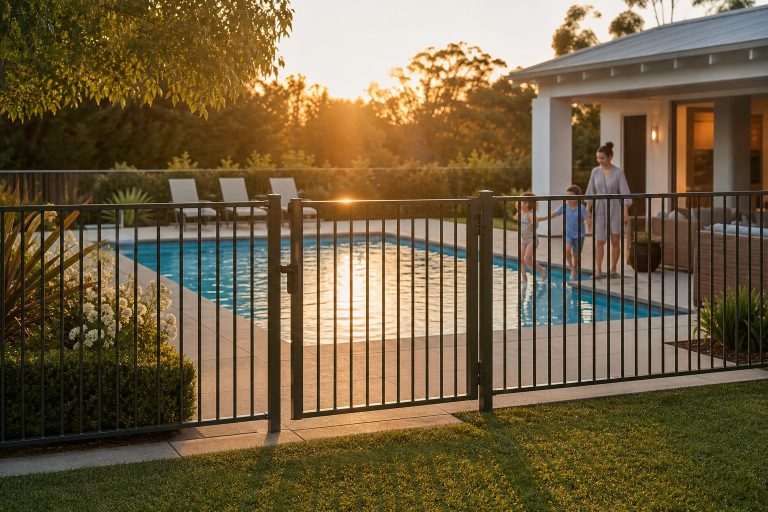
A pool fence is important, but it is not a substitute for attentive supervision. The layers of protection recommended for drowning prevention include a barrier that completely surrounds the pool, self-closing and self-latching gates, alarms or a safety cover when the house forms part of the barrier, and accessible rescue equipment. A phone near the pool and caregivers trained to respond in an emergency can also support the plan.
Keep Access Points Deliberate
Limit the number of ways someone can enter the pool area, then make each gate easy for adults to use correctly. Gates that are inconvenient, poorly aligned, or difficult to latch are more likely to be left open. Check local requirements for height, latch placement, swing direction, opening size, and spacing rather than assuming one design works everywhere.
Step 3: Choose the Right Fence Location
There are two common approaches: enclosing the entire yard or installing a dedicated barrier around the pool. A full-yard fence may help with pets and property definition, but a separate pool enclosure creates another layer between the home and water. Walk the proposed line and ask whether a child could reach the pool from the house, whether equipment remains accessible, and whether gates sit away from frequent traffic paths.
Also, look for climbable conditions. Patio furniture, planters, toys, storage bins, low tree limbs, and nearby structures can change how a barrier functions. Leave room for mowing, landscaping, and pool service so routine work does not encourage shortcuts through an unsecured gate.
Step 4: Pick a Material That Fits the Yard
Material selection should reflect visibility, privacy, weather exposure, maintenance expectations, and the yard’s terrain. Wood provides a traditional appearance and flexible design options, but it commonly needs periodic finishing. Vinyl is easy to wash and can provide privacy. Aluminum offers an open appearance that can suit pool areas where visibility matters. Chain link is practical and can be paired with privacy screening, while steel emphasizes strength but needs suitable corrosion protection. Composite options are available for homeowners seeking a wood-like appearance with less routine upkeep.
No material is automatically right for every property. Review how the fence will look beside the house, how it handles a slope, and how much care the household is realistically prepared to provide.
Step 5: Plan for Children and Pets
Height, openings, rails, and gate hardware all affect how a fence performs. Wide gaps may allow a small pet through, while horizontal elements can create footholds for determined climbers. For dogs, consider the animal’s size and behavior: small dogs may need tighter spacing, jumpers may need added height, diggers may need a reinforced lower edge, and large dogs may need robust posts and dependable gate latches.
Step 6: Account for Slopes, Drainage, and Soil
Walk the proposed fence line after heavy rain before finalizing the design. Mark standing water, fast-moving runoff, soft soil, retaining walls, exposed roots, and uneven grades. Panels can be stepped down a slope or adjusted to follow the grade, depending on the material and layout. Address drainage or erosion problems first, because a fence cannot correct unstable soil or poor grading.
Step 7: Check Rules Before Ordering Materials
City, county, and neighborhood rules can affect fence height, setbacks, pool-barrier details, corner-lot visibility, permits, and gate placement. Confirm property lines as well. If an HOA applies, review its written requirements for materials, colors, location, and approval procedures before committing to a design.
Step 8: Design Gates for Daily Use
Gates deserve the same planning as fence panels. Place them where people naturally enter and exit, allow adequate width for lawn equipment or pool service, and avoid locations where a slope prevents reliable closing. Test the intended swing path so the gate does not open into a walkway or create an obstruction. For pool barriers, inspect the self-closing and self-latching action regularly.
Step 9: Compare Cost With Long-Term Care
Compare written estimates based on the complete scope, not only the lowest number. Each proposal should identify material and dimensions, posts and footings, gates and hardware, removal or disposal work, permit responsibilities, cleanup, warranty terms, and expected timing. It is also wise to factor in future cleaning, refinishing, repairs, and hardware replacement.
Step 10: Build a Simple Maintenance Routine
- Monthly: Test latches, hinges, and visible fasteners.
- After storms: Check posts, panels, branches, and gate alignment.
- Spring: Clean surfaces and inspect drainage around posts.
- Summer: Remove toys or furniture that could become climbing aids.
- Fall and winter: Clear debris and watch for frost-related movement.
Common Planning Mistakes to Avoid
Avoid choosing a style before defining its purpose, overlooking service access, relying on the house as the only barrier, ignoring drainage, or assuming rules are identical across neighborhoods. It is also important to plan for future landscaping. A young tree, raised planter, or new deck can alter clearance near the fence later.
Questions to Ask Before Starting
- What is the fence’s primary purpose?
- Does the layout create a complete pool barrier where needed?
- Which heights, openings, and gate features are locally required?
- Where should gates be placed for safe, convenient use?
- How will slopes, drainage, pets, and future landscaping affect the design?
- What seasonal maintenance will the chosen material require?
Conclusion
A safer backyard begins with coordinated planning. When pool access, children, pets, terrain, gates, local rules, and maintenance are considered together, the fence can support everyday use without introducing new problems. Practical backyard swimming pool safety tips can also help homeowners think beyond the barrier and prepare for a safer time around the water.