- Key Takeaways
- Why Dresses Matter In A Practical Wardrobe
- Build From Your Daily Needs
- Questions To Ask Before Shopping
- Choose The Right Dress Length
- Start With Core Dress Shapes
- Compare Dress Fabrics And Layers
- Create A Simple Color Plan
- Use Easy Outfit Formulas
- Check Fit Before Buying
- Care For Dresses And Sweaters
- Avoid Common Wardrobe Mistakes
- Final Thoughts
Key Takeaways
- Fit and comfort should guide every plus size dress purchase.
- Maxi, midi, and mini lengths can all work beautifully when the proportions suit your lifestyle and styling preferences.
- Versatile silhouettes, including wrap, fit-and-flare, shirt dresses, and knit dresses, can serve several occasions.
- A lightweight cardigan or sweater can help one dress for work across more seasons.
- Fabric, stretch, neckline, and waist placement affect how a dress feels throughout the day.
- Planning three outfits before buying a dress helps ensure it will earn repeat wear.
For plus-size women, a smart wardrobe plan is not about buying every new style. It is about choosing dresses and layers that feel comfortable, fit well, and make getting dressed easier. A few reliable Womens Plus Size Sweaters can also extend the life of favorite dresses, adding warmth, coverage, and a polished finish without hiding your personal style. The most useful dress wardrobe includes options for everyday errands, work, evenings out, weddings, and changing weather. When you understand length, silhouette, fabric, and layering, it becomes much easier to choose between a maxi, midi, mini, casual dress, going-out dress, or wedding guest dress with confidence.
Why Dresses Matter In A Practical Wardrobe
Dresses simplify outfit planning by providing an instant base look. The broad range of dress styles worn across everyday and formal settings also makes them especially useful for building a wardrobe with fewer pieces that still feels varied. Change the shoes, bag, jewelry, or top layer, and the same dress can look casual, office-ready, or event-appropriate. For plus-size styling, the goal is never to disguise your body. Instead, choose pieces that allow movement, sit comfortably at the bust and waist, and help you feel like yourself. A great dress should let you sit, walk, reach, and enjoy your plans without constantly having to adjust. When a dress fits well and makes you feel confident, you wear it more often and get better value from your investment.
Build From Your Daily Needs
Start by thinking about where you actually go during a typical week. A casual T-shirt dress may be a better investment than a formal option if most days involve school runs, errands, or relaxed lunches. If your calendar includes dinners, celebrations, or professional events, a polished midi dress or elevated maxi may offer more value.
Questions To Ask Before Shopping
- Do you need a dress for casual wear, work, a night out, or a wedding?
- Will you be standing, sitting, dancing, traveling, or walking for long periods?
- Which shoes and layers do you already own?
- Do you prefer more waist definition, a relaxed shape, or a close fit?
- Is the fabric suitable for the season and the level of care you can manage?
Choose The Right Dress Length
Dress length changes both the mood and function of an outfit. There is no universally flattering “right” length. The best option is the one that feels secure, suits the occasion, and works with your preferred shoes. For plus-size women, choosing a length that makes you feel confident and comfortable is more important than following trends.
- Mini dresses: A playful choice for casual plans or nights out. Pair with tights, boots, or a longer cardigan for additional coverage. Mini dresses can feel modern and youthful when they fit well through the hips and thighs without pulling or riding up.
- Midi dresses: A flexible middle ground for work, brunch, dinner, and wedding guest outfits. Try ankle boots, flats, sneakers, or heels, depending on the setting. Midi dresses are exceptionally versatile for plus-size bodies because they often provide more balanced proportions and comfortable styling options for different occasions.
- Maxi dresses: Comfortable for warm weather, travel, vacations, and special events. A defined waist or adjustable tie can add shape without sacrificing ease. Maxi dresses work beautifully for plus-size figures when they have enough fabric to drape smoothly without clinging to every curve.
Start With Core Dress Shapes
A small rotation of silhouettes gives you more outfit options than several nearly identical dresses. Consider the roles each shape can play in your closet and how each one flatters and feels on your body.
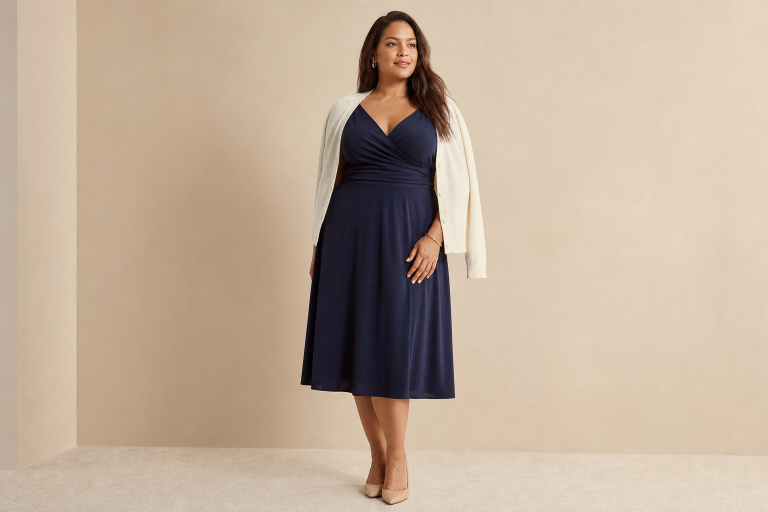
- Wrap dress: Offers an adjustable waist and an open neckline that can work for daytime or dressier plans. The wrap style allows you to customize the fit and level of coverage, making it especially forgiving and flattering for plus-size women.
- Fit-and-flare dress: Defines the waist and creates movement through the skirt, making it a practical choice for celebrations. This silhouette is particularly flattering for plus-size bodies because it emphasizes your waist while allowing comfortable room through the hips and thighs.
- Shirt dress: Brings a polished, easygoing feel for workdays, casual outings, and travel. A structured shirt dress can provide support and comfort for plus-size women while maintaining a professional appearance.
- Body-skimming knit dress: A comfortable option for cooler months, especially with boots and a cardigan or jacket. Knit fabrics with stretch provide comfort and allow the dress to move with your body rather than cling.
- Smocked or empire-waist dress: Can provide comfortable room through the midsection while keeping the outfit feminine and versatile. These styles are designed with plus-size comfort in mind, offering a generous fit without sacrificing style.
Compare Dress Fabrics And Layers
Fabric affects comfort as much as silhouette. Cotton and linen blends can feel breathable in warm conditions, while jersey and knit fabrics often provide softness and stretch. Satin, chiffon, lace, and crepe are common choices for going-out and wedding guest dresses, but check the lining and fit before committing. For plus-size dresses, adequate lining prevents transparency and unwanted clinging, while fabric with natural stretch allows you to move comfortably throughout the day. Reading the fiber content and care label is especially useful when comparing similar styles. The Federal Trade Commission explains how textile labels identify fiber content and care information, details that can help you decide whether a garment suits your comfort needs and routine.
Create A Simple Color Plan
Choose two or three core colors that work with your shoes, bags, and layers. Black, navy, burgundy, olive, chocolate brown, and jewel tones can serve as versatile foundations, while a bold print or a brighter color can add personality to your wardrobe. For wedding guest attire, consider the event dress code and avoid white or ivory unless the couple has specifically requested them. Neutrals and jewel tones are particularly forgiving choices for plus-size women because they provide a polished backdrop that allows you to style with confidence.
Use Easy Outfit Formulas
- Casual: T-shirt, midi dress, denim jacket, white sneakers, and a crossbody bag. This formula feels effortless and works for errands, casual lunches, and weekend plans.
- Workday: Shirt dress, lightweight cardigan, loafers, and simple earrings. Layering a cardigan over a shirtdress adds polish and makes the outfit feel put-together without being formal.
- Going out: Body-skimming midi dress, heeled boots or sandals, and a structured bag. This combination balances comfort with elevated styling for dinners and evening events.
- Wedding guest: Flowing maxi or polished midi dress, comfortable dress shoes, and a small clutch. Choose a style with enough structure and fabric weight to feel special while remaining comfortable enough to enjoy the event.
- Cool-weather weekend: Knit dress, opaque tights, tall boots, and a relaxed sweater layer. Layering a sweater over a knit dress extends its versatility across seasons and creates a cozy, put-together look.
Check Fit Before Buying
Check more than the size label. Make sure the bust does not pull, the armholes allow easy movement, and the waist seam sits where you want it. If the dress has buttons, sit down to see whether they gap. If it has a slit, walk and take a full step. For plus-size dresses, a proper fit means you should feel supported without restriction, with enough room through the bust, waist, hips, and thighs for the fabric to drape smoothly. For online shopping, compare your measurements with the brand’s size guide and read the garment description for stretch, lining, and length details. Many plus-size brands provide fit notes that explain how the dress works for different body types, so take advantage of these resources.
Care For Dresses And Sweaters
Follow the garment label first. Hang woven dresses on appropriate hangers, fold heavy knit dresses and sweaters to reduce stretching, and allow pieces to dry fully before storing them. Washing less often when a garment is not soiled, then spot cleaning or airing it out when appropriate, can help delicate fabrics last longer.
Avoid Common Wardrobe Mistakes
- Buying a dress for an imagined lifestyle instead of your real one.
- Choosing a length that makes you feel restricted or self-conscious.
- Ignoring fabric feel, lining, and stretch, as these details directly impact how comfortable and confident you feel.
- Saving every dress for a special occasion instead of styling it multiple ways.
- Forgetting to test whether your current shoes, bras, and layers work with it.
Final Thoughts
A practical plus-size dress wardrobe can be small, stylish, and highly versatile. Prioritize a comfortable fit, choose lengths that suit your lifestyle, and use sweaters and other layers to make your favorite dresses work through more of the year. With a few dependable silhouettes and thoughtful styling, getting dressed can feel more confident and far less complicated. The goal is to build a collection of pieces that work hard for your real life while making you feel great every time you wear them. Consider choosing dresses that can be dressed up or down depending on the occasion, such as a simple midi that works with sneakers for a casual day and can be paired with flats, boots, or accessories for a more polished look. Fabrics that offer comfort and easy movement can also make dresses more practical for long days, travel, work, or everyday activities. Adding cardigans, jackets, sweaters, tights, and scarves can help you get more wear out of your favorite dresses as temperatures change. Instead of buying pieces that only work for one event, focus on styles you can wear repeatedly and combine with items already in your closet. This approach can help create a wardrobe that feels personal, comfortable, and easy to manage throughout the year.