Dressing well isn’t about following a strict set of rules — it’s about understanding a few basic principles of proportion and using them to feel more comfortable and confident in what you wear. Body shape guidance works best as a starting toolkit, not a rulebook, and every shape has far more flexibility than most advice suggests.
- Understand the Point of Shape Guidance
- Common Shape Categories and What Tends to Work
- Rectangle (Similar Shoulder, Waist, and Hip Width)
- Pear (Hips Wider Than Shoulders)
- Apple (Fuller Midsection, Slimmer Legs)
- Hourglass (Shoulders and Hips Similarly Wide, Defined Waist)
- Inverted Triangle (Shoulders Wider Than Hips)
- Focus on Fit Before Style
- Use Proportion, Not Just Shape, as a Guide
- Treat Guidance as a Toolkit, Not a Restriction
- The Most Reliable Test
Understand the Point of Shape Guidance
Clothing that considers body shape typically works by creating balance — drawing attention where you want it and softening areas you’d rather downplay. None of this is about hiding your body; it’s about choosing cuts and details that work with its natural proportions rather than against them.
Common Shape Categories and What Tends to Work
These categories are general starting points, not rigid boxes — most people find their proportions shift somewhat between them.
Rectangle (Similar Shoulder, Waist, and Hip Width)
Creating the appearance of a more defined waist tends to work well here — belts, wrap styles, peplum details, and fitted jackets that nip in at the middle. Layering also adds shape that a straight silhouette alone doesn’t provide.
Pear (Hips Wider Than Shoulders)
Balancing proportions by drawing attention upward often works well — structured shoulders, statement necklines, and detailing on tops. A-line skirts and slightly wider-leg trousers tend to sit comfortably through the hip without clinging.
Apple (Fuller Midsection, Slimmer Legs)
Drawing the eye to the legs and creating definition at the smallest point of the waist — often just under the bust — tends to flatter this shape. Empire waistlines, V-necks, and structured fabrics that skim rather than cling around the middle are common choices.
Hourglass (Shoulders and Hips Similarly Wide, Defined Waist)
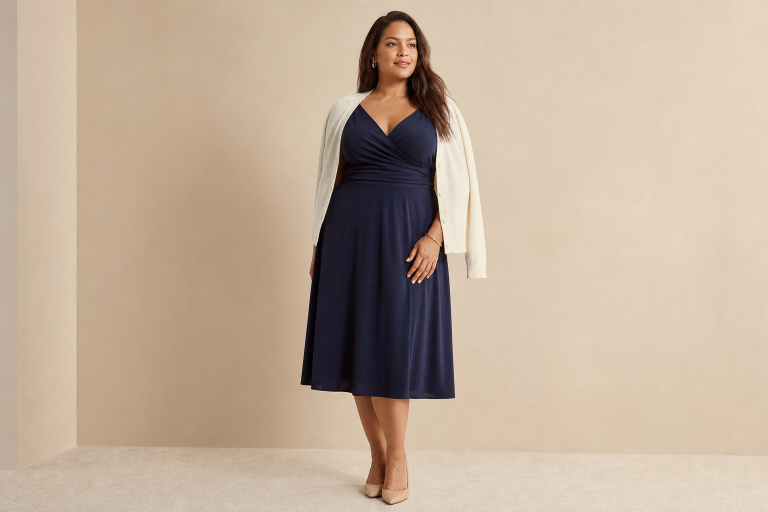
Fitted or semi-fitted styles that follow the natural waistline tend to work well, since the proportions are already relatively balanced. Wrap dresses, belted coats, and tailored blazers highlight a shape that’s already there rather than needing to create it.
Inverted Triangle (Shoulders Wider Than Hips)
Balancing proportions downward often works well — wider-leg trousers, A-line skirts, and detailing lower on an outfit. Simpler, less structured tops through the shoulder area help keep the upper body from feeling top-heavy.
Focus on Fit Before Style
Regardless of shape, ill-fitting clothing rarely looks intentional. A great cut in the wrong size undermines itself; a simple piece that fits correctly usually looks better than an elaborate one that doesn’t. Prioritise trying things on and adjusting — even small tailoring changes — over chasing a specific style.
Use Proportion, Not Just Shape, as a Guide
Beyond broad body shape, proportion between top and bottom halves matters. If your legs are proportionally longer, a higher waistline can balance that; if your torso is longer, a lower waistline often does the same. These small adjustments matter as much as shape-based advice, and they’re worth noticing on yourself specifically.
Treat Guidance as a Toolkit, Not a Restriction
Shape advice is most useful as a set of options to try, not a list of rules to obey. Plenty of well-dressed people wear pieces that “aren’t supposed to” suit their shape, because confidence, personal style, and how a piece is styled around it matter just as much as the underlying silhouette guidance.
The Most Reliable Test
Beyond any category or rule, the most consistent signal is simple: does this fit comfortably, does it let you move naturally, and do you feel good wearing it? Shape guidance is a helpful starting point for narrowing choices — but comfort and personal preference are what actually make an outfit work day to day.