Planning a fence in Salt Lake City starts with more than picking a material or color. Your yard layout, neighborhood character, mountain weather, street exposure, and daily routines should all guide the design. Homeowners who are weighing layouts and materials can also consult a professional fence company in Salt Lake City to help turn a general idea into a practical project scope.
The most successful fence is not automatically the tallest or most decorative one. It is the one that gives the property the right level of privacy, supports safe movement for people and pets, fits the home, and remains manageable through sun, snow, rain, and seasonal temperature changes.
- Key Takeaways
- Table Of Contents
- Start With The Purpose Of The Fence
- Check The Property Before Designing
- A Simple Pre-Design Sequence
- Compare Common Fence Materials
- Plan Privacy Without Creating A Closed-In Yard
- Build Safety Into The Layout
- Choose Practical Gate Locations
- Match The Fence To The Home
- Plan For Long-Term Maintenance
- Fence Planning Checklist
- Final Thoughts
Key Takeaways
-
Identify the fence’s primary purpose before selecting its style or material.
-
Review property lines, access needs, drainage, and local requirements before installation.
-
Use solid and open fence sections strategically instead of treating the whole lot the same way.
-
Plan gates around how the yard will actually be used, including maintenance and equipment access.
-
Choose a design that looks appropriate from both the street and the yard.
Table Of Contents
-
Start With The Purpose
-
Check The Property First
-
Compare Fence Materials
-
Create Privacy With Balance
-
Build Safety Into The Plan
-
Place Gates Where They Work
-
Support Curb Appeal
-
Prepare For Maintenance
-
Use A Planning Checklist
Start With The Purpose Of The Fence
A fence designed mainly for a dog run has different priorities than one intended to screen a patio, define a front yard, or secure a pool area. Begin by writing down what the fence must accomplish. Consider where you want privacy, where you need clear sightlines, who will use the space, and whether lawn equipment or service workers need access.
For example, a home near a busy Salt Lake City street may benefit from a more open front fence that preserves visibility near the driveway, plus a more private rear section for outdoor seating. A property with a garden may need an enclosure that is functional without making the entire yard feel closed in.
Check The Property Before Designing
Before committing to a fence line, review a current survey or reliable property records. Locate driveways, sidewalks, retaining walls, mature trees, utility equipment, irrigation components, slopes, and drainage paths. A fence that crosses a drainage route or blocks a needed side-yard passage can create avoidable problems later.
Local rules also belong at the beginning of the process, not the end. Salt Lake City notes that fence height may depend on the yard location, proximity to driveways and sidewalks, topography, and other site conditions, so homeowners should review the city’s fence requirements and location restrictions before finalizing dimensions. HOA standards, historic-district considerations, and easements may add additional requirements.
A Simple Pre-Design Sequence
-
Confirm boundaries and shared access areas.
-
Mark intended fence sections and gate locations on a site sketch.
-
Check city, HOA, and neighborhood requirements.
-
Request utility marking before any post holes are dug.
-
Walk the route to identify grade changes, drainage, and obstacles.
Compare Common Fence Materials
Material selection affects appearance, privacy, upkeep, and the overall visual weight of the fence. No option is best for every Salt Lake City property. The right choice depends on the purpose of the enclosure and the amount of regular care you are prepared to provide.
The following comparison can help narrow the choices.
|
Material |
Privacy |
Maintenance |
Visibility |
Common Uses |
|---|---|---|---|---|
|
Wood |
High with solid panels |
Periodic cleaning and finishing |
Low to moderate |
Backyards, traditional homes |
|
Vinyl |
High with solid panels |
Routine washing |
Low to moderate |
Privacy boundaries, low-upkeep designs |
|
Aluminum |
Low |
Routine inspection |
High |
Front yards, gardens, pool areas |
|
Chain Link |
Low without screening |
Routine inspection |
High |
Pet areas, practical enclosures |
|
Composite |
High with solid panels |
Routine cleaning |
Low |
Modern privacy designs |
Plan Privacy Without Creating A Closed-In Yard
Privacy can be targeted rather than applied equally around every edge of the property. Solid panels may make sense beside a patio, bedroom window, or closely spaced neighbor. Near a front walk, corner, or driveway, an open style can feel more welcoming and preserve useful visibility.
Use landscaping to soften long stretches of fencing. Shrubs, ornamental grasses, climbing plants, and planting beds can reduce the visual impact of a tall privacy section while leaving enough space for cleaning, repairs, and airflow. Avoid placing plants so close that they constantly press against panels or posts.
Build Safety Into The Layout
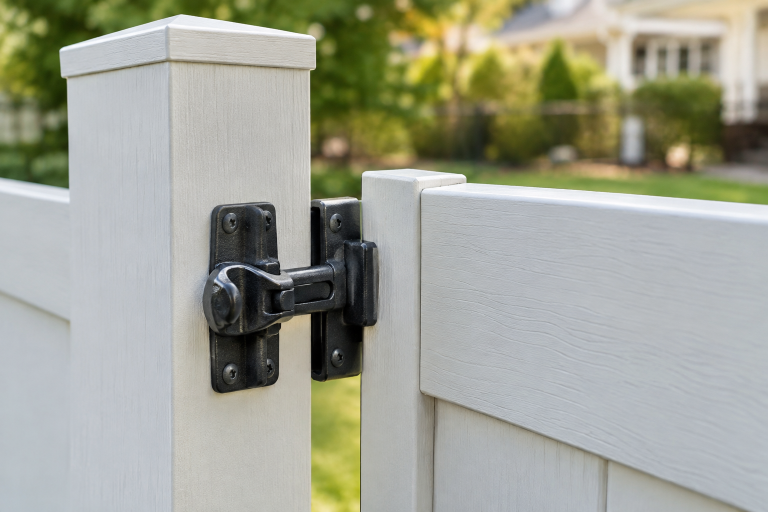
Safety details should be part of the layout, not an afterthought. Keep sightlines clear where vehicles enter or leave the property. Use secure posts, smooth edges, dependable latches, and gate hardware suited to the gate’s size and weight. If children or pets will use the yard, check that no gaps or weak points are overlooked.
Pool and spa barriers require particularly careful planning. The Consumer Product Safety Commission recommends that pool barriers create layers of protection and highlights self-closing, self-latching pedestrian gates in its home pool safety guidance. Local code requirements may be more specific, so confirm them before choosing height, spacing, or gate hardware.
Choose Practical Gate Locations
Gates determine how convenient the fence is to use every day. A walk gate can connect the driveway to the backyard, provide access to trash storage, or make garden work easier. A wider double gate may be worthwhile when a mower, trailer, or future landscaping project needs access.
Before installation, test the proposed swing direction and consider slopes, snow buildup, water flow, latch height, and clearance from steps or planting beds. A gate should open and close comfortably without scraping the ground or blocking the route people naturally use.
Match The Fence To The Home
A fence should frame the property rather than compete with it. Clean horizontal lines can complement contemporary architecture, while a traditional picket profile may suit older homes and cottage-style landscaping. Repeating a color found in trim, masonry, or the front door can create a more cohesive result.
Scale matters as well. Oversized solid sections can overwhelm a small front yard, while a low, open design can preserve a connection between the home and the street. Posts, caps, and gates offer opportunities for detail without making the entire fence overly elaborate.
Plan For Long-Term Maintenance
Every fence benefits from regular attention. Inspect the full line each spring and after significant wind, snow, or moisture events. Look for leaning posts, damaged panels, loose fasteners, sticking gates, soil erosion, and vegetation that traps debris or moisture against the structure.
Wood may need refinishing over time, while vinyl, aluminum, chain-link, and composite systems still require cleaning and hardware checks. Prompt repairs are usually simpler than waiting for a loose post, worn hinge, or drainage issue to affect a larger section.
Fence Planning Checklist
-
Define the main purpose of each fence section.
-
Confirm property lines and access areas.
-
Review Salt Lake City and HOA requirements.
-
Arrange utility marking before digging.
-
Select material based on privacy, visibility, and upkeep needs.
-
Measure gates for people, pets, and equipment.
-
Protect sightlines near driveways and sidewalks.
-
Account for drainage, landscaping, and seasonal conditions.
-
Prepare a written project scope before work begins.
Final Thoughts
A well-planned Salt Lake City fence balances how a property looks with how it functions. By starting with the purpose, respecting the site, planning gates and safety details early, and choosing materials that fit your maintenance expectations, you can create a boundary that supports daily life for years to come.