- Key Takeaways
- Why a Paver Patio Needs More Than Attractive Materials
- What to Expect From the Patio Design Process
- Choosing Materials for a New Jersey Patio
- Expand a Patio Into an Outdoor Living Area
- Outdoor Kitchens and Fire Features
- Questions to Ask Before Requesting an Estimate
- Build a Patio With a Complete Plan
- Conclusion
Key Takeaways
- A well-planned paver patio should account for layout, drainage, base preparation, access, and intended use.
- Patio materials can include paver brick, natural stone, concrete, gravel, or permeable pavers, depending on site conditions and design goals.
- Proper excavation, grading, base preparation, and edge support are important parts of the installation process.
- Walkways, retaining walls, fire pits, seating, pool patios, and outdoor kitchens can be incorporated into a larger backyard plan.
- Drainage and stormwater management should be considered before selecting materials or finalizing the patio layout.
- Homeowners should review material options, site requirements, project scope, and costs before construction begins.
- A written estimate can help clarify the work, materials, features, and preparation included in the project.
A well-built patio can give a New Jersey backyard a dedicated place for dining, relaxing, grilling, and gathering with family and friends. When homeowners begin looking into paver brick patios, the most important decision is not simply choosing a color or pattern. The project needs a plan that accounts for the property layout, drainage, base preparation, access, and the ways the space will be used. Tomasso Contracting provides custom hardscaping for homeowners who want to make better use of their outdoor areas. Its hardscaping services include custom backyard paver patios, borders and walls, integrated fire pits and seating, walkways, retaining walls, pool patios, and outdoor kitchens. The company also states that its reputation has been built through more than three decades of asphalt, concrete, hardscaping, and masonry projects in New Jersey.
Why a Paver Patio Needs More Than Attractive Materials
A patio surface is only one part of the completed system. A lasting installation begins below the visible pavers, with excavation, a properly prepared base, grading, and edge support. These details help create a stable outdoor surface and reduce the risk of problems such as uneven areas, moving borders, water collecting near the house, or pavers that no longer sit level. Tomasso Contracting can approach a paver brick patios request as part of a complete hardscaping plan rather than an isolated patch of paving. That means considering where people will enter the patio, how the space connects to the yard, whether the site has a slope, and where rainwater should move after a storm. The result can be a patio that looks intentional and works naturally with the rest of the property. For homes where runoff is a major concern, the state’s stormwater best management practices manual identifies pervious paving systems as an option that requires specific design considerations. Permeable paving is not a universal answer, but it can be worth discussing when a site has appropriate conditions and stormwater management is part of the project goal.
What to Expect From the Patio Design Process
A clear design process helps homeowners make practical choices before equipment arrives and materials are delivered. Tomasso Contracting can work through the project details with the homeowner so the completed patio suits both the property and the household.
- Define the purpose of the space. A patio designed for quiet morning coffee may have different needs than one intended for large cookouts, poolside seating, or an outdoor kitchen.
- Review the site. Yard dimensions, access routes, existing structures, slopes, and drainage patterns all affect the design and construction approach.
- Select materials. Paver bricks, natural stone, concrete, gravel, borders, and masonry elements can be combined to achieve the desired appearance and intended use.
- Plan movement through the yard. Walkways can connect the home, driveway, patio, pool, garden, or seating area in a more organized way.
- Consider optional features. Retaining walls, fire pits, built-in seating, pool patios, and cooking areas can turn a basic patio into a more complete outdoor living area.
- Review the estimate. A written project estimate allows homeowners to understand the proposed scope before construction begins.
Choosing Materials for a New Jersey Patio
No single patio material is the right choice for every yard. The best option depends on the home’s exterior, the available space, drainage needs, expected foot traffic, maintenance preferences, and the features planned around the patio.
- Paver brick: Offers pattern flexibility, defined borders, and the ability to integrate contrasting colors or shapes into the layout.
- Natural stone: Provides variation in texture and color, making it a strong complement to masonry walls, steps, or fire features.
- Concrete: Can work well for larger continuous surfaces and may be incorporated into a broader hardscaping design.
- Gravel: May serve as a complementary material for selected paths, seating zones, or landscape transitions.
- Permeable pavers: Use joints and aggregate layers to allow water to pass through the surface when the system is properly designed for the site.
Research into permeable pavement has included porous asphalt, pervious concrete, and permeable interlocking concrete pavers. For a residential patio, however, the material decision should still be site-specific. Soil conditions, grading, nearby structures, maintenance expectations, and applicable local requirements all deserve consideration before choosing a permeable system.
Expand a Patio Into an Outdoor Living Area
Tomasso Contracting can combine a patio with related features that give the backyard more purpose. A walkway can establish a clean route from the house to the patio. A retaining wall can help manage a change in grade while creating a defined planting or seating area. A pool patio can provide room for circulation and outdoor furniture around the water.
Outdoor Kitchens and Fire Features
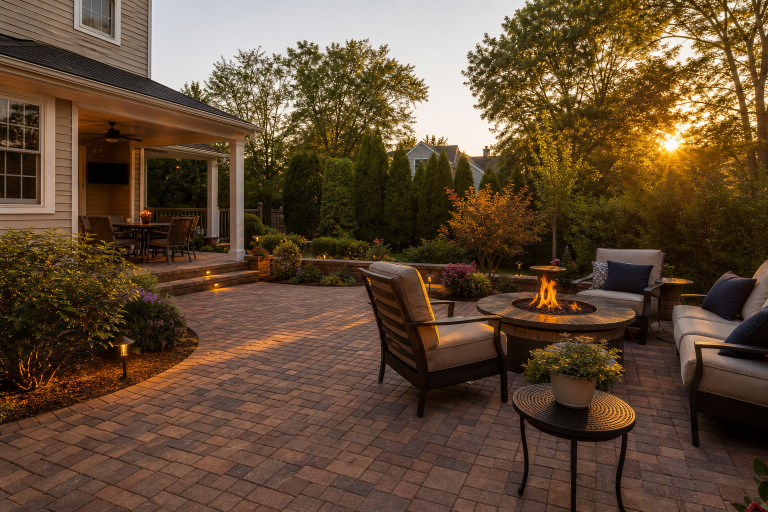
For homeowners who enjoy entertaining outside, an outdoor kitchen can be built over a new or existing patio. Tomasso Contracting lists built-in grills, countertops, prep space, and custom masonry finishes among its outdoor kitchen options. A fire pit and integrated seating can also create a comfortable focal point for evenings outdoors. Planning these features together is usually more effective than adding them later without considering layout, traffic flow, and surface space. A cooking area needs a usable counter, sufficient space, and room for guests to move safely. A fire feature needs seating space and a location that supports the overall design rather than interrupting it.
Questions to Ask Before Requesting an Estimate
- How will water move away from the patio and the home after heavy rain?
- What excavation and base preparation will the installation require?
- Which paver, stone, or border materials fit the home’s exterior?
- Will the patio connect to a walkway, pool, fire pit, retaining wall, or outdoor kitchen?
- How will slopes, grade changes, delivery access, and cleanup be handled?
- What work, materials, and features are included in the written estimate?
Build a Patio With a Complete Plan
A successful patio is built around more than visual appeal. It should have a layout that supports everyday use, a stable foundation, a thoughtful approach to drainage, and materials that complement the home and property. Tomasso Contracting offers New Jersey homeowners a way to bring those elements together through custom patio construction and related hardscaping services. Whether the goal is a simple backyard gathering space or a coordinated outdoor area with walkways, walls, a fire pit, poolside paving, or an outdoor kitchen, the planning stage sets the direction for the finished result. Starting with clear goals and a detailed estimate can help turn an underused yard into a durable, useful place to spend time outdoors.
Conclusion
A paver patio can provide a practical, defined space for dining, relaxing, entertaining, and enjoying a New Jersey backyard. Still, a successful project requires more than just selecting an attractive pattern. Careful planning should consider the property’s layout, drainage, grading, access, base preparation, and the intended use of the finished space. Tomasso Contracting offers custom hardscaping services that can incorporate paver patios with walkways, retaining walls, fire pits, seating, pool patios, and outdoor kitchens. Homeowners can also compare materials such as paver brick, natural stone, concrete, gravel, and permeable paving based on the site’s conditions and maintenance needs. Before construction begins, discussing water management, excavation, materials, grade changes, access, and the complete project scope can help avoid confusion later. A detailed estimate and thoughtful design process can help turn an underused backyard into an outdoor area that is functional, coordinated, and suited to the property’s needs.