- Key Takeaways
- Table of Contents
- Why Freeze-Thaw Weather Creates Plumbing Problems
- Early Warning Signs to Watch For
- What to Do Before the Next Hard Freeze
- How to Protect Outdoor Plumbing
- What to Do If a Pipe Freezes
- When to Call for Professional Help
- Why Spring Is the Right Time for a Plumbing Check
- Frequently Asked Questions
- At What Temperature Can Pipes Freeze?
- Should Every Faucet Drip During a Freeze?
- Can a Frozen Pipe Thaw Without Bursting?
- What Is the First Step After a Pipe Bursts?
- Why Do Pipes Keep Freezing in the Same Area?
- Conclusion
Key Takeaways
- Freeze-thaw weather can put stress on pipes, fittings, valves, and outdoor faucets.
- Draft sealing, pipe insulation, and steady indoor heat can help protect vulnerable plumbing.
- Knowing how to turn off the main water supply can limit damage after a burst pipe.
- Frozen pipes should never be thawed with an open flame or fuel-burning device.
- A spring plumbing check can uncover damage that was hidden during winter.
Table of Contents
- Why Freeze-Thaw Weather Creates Plumbing Problems
- Early Warning Signs to Watch For
- What to Do Before the Next Hard Freeze
- How to Protect Outdoor Plumbing
- What to Do If a Pipe Freezes
- When to Call for Professional Help
- Why Spring Is the Right Time for a Plumbing Check
- Frequently Asked Questions
- Conclusion
Minnesota winters can shift quickly from deep cold to a temporary thaw, then back below freezing. Those changes can be hard on plumbing in exterior walls, garages, crawl spaces, basements, and other areas that do not stay consistently warm. Homeowners who prepare early can reduce the chance of surprise leaks, water damage, and interrupted water service.
For Twin Cities households, a practical winter plan starts with knowing which pipes are vulnerable and where the main shutoff valve is located. Twin Cities Premier Plumbing can help when a frozen, leaking, or repeatedly troublesome line needs professional attention, but many preventative steps can be completed before the next hard freeze arrives.
Why Freeze-Thaw Weather Creates Plumbing Problems
Water expands when it freezes. Ice inside a pipe can restrict flow and create pressure that damages the pipe or a connection. Leaks may appear later, after temperatures rise, ice melts, and normal water pressure returns.
Pipes in exterior walls, garages, basement ceilings near rim joists, and crawl spaces are vulnerable to cold air entering through small gaps around wiring or plumbing. Older homes, vacant rooms, poor insulation, and unheated areas need extra attention.
Early Warning Signs to Watch For
Responding to a small warning sign may prevent a much larger repair. Watch for little or no water from a single faucet, a sudden pressure drop, frost or heavy condensation on accessible piping, or banging sounds when a faucet is turned on. Discolored water after a freeze, stains near a ceiling or cabinet, and puddles close to an exterior faucet or foundation wall can also signal trouble.
What to Do Before the Next Hard Freeze
- Locate the main water shutoff valve. Make sure household members know where it is and that the path to it is clear.
- Seal obvious drafts. Check around windows, doors, vents, and openings where pipes enter walls or floors.
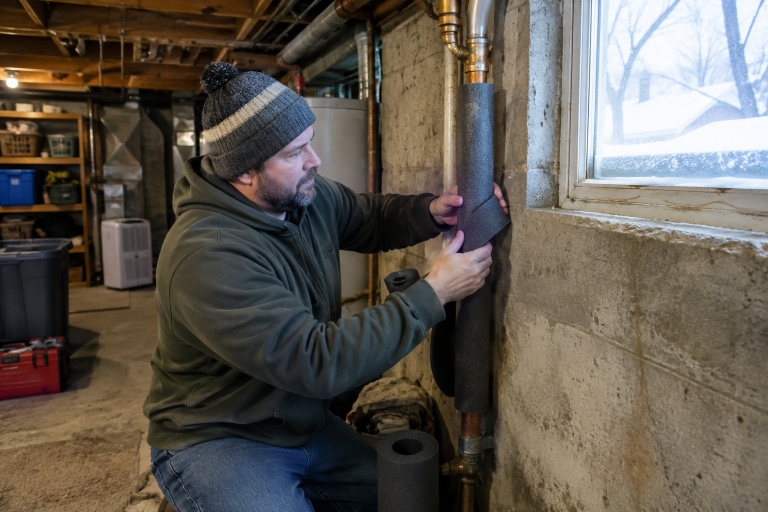
- Insulate exposed pipes. Focus on lines in garages, unfinished basements, crawl spaces, and along exterior walls.
- Open sink cabinet doors when needed. This allows warmer indoor air to circulate around plumbing beneath sinks.
- Keep indoor temperatures steady. Avoid turning off heat in unused rooms during severe cold.
- Disconnect garden hoses. If the home has an indoor shutoff for exterior faucets, close it and drain the line according to the fixture setup.
- Prepare before traveling. Keep the heat on and arrange for someone to check the house during an extended absence.
Municipal guidance on frozen-pipe prevention also emphasizes early preparation for vulnerable plumbing. Insulation, warm indoor air, and attention to water flow can be especially important when a cold snap follows a brief Minnesota thaw.
How to Protect Outdoor Plumbing
Outdoor faucets and irrigation components are exposed to freezing temperatures first. Remove hoses before freezing weather, because a connected hose can trap water near the faucet. Close and drain exterior faucet lines when the plumbing system includes an interior shutoff, and use an insulated faucet cover where appropriate. Irrigation systems should be winterized according to the equipment manufacturer’s instructions.
Check exterior faucets again after the first substantial thaw. A hose bib may look normal even when a hidden section of pipe has cracked. The leak may only become noticeable once thawed water reaches the damaged area and pressure returns.
What to Do If a Pipe Freezes
- Turn off the main water supply if a pipe has burst or water is actively leaking.
- Open the affected faucet carefully to relieve pressure and provide a path for the melting water to exit.
- Look for moisture in nearby cabinets, walls, ceilings, and floors.
- Gradually warm the surrounding space with normal room heat.
- Do not use a torch, open flame, or fuel-burning heater to thaw a pipe.
- Call a professional if the frozen section is hidden, inaccessible, damaged, or leaking.
Basic cold-weather pipe precautions include keeping heat steady, opening cabinet doors around vulnerable plumbing, and knowing where the main shutoff is located. If water reaches outlets, appliances, or an electrical service panel, avoid the area and contact the appropriate emergency service.
When to Call for Professional Help
Some plumbing issues are not safe or practical to repair yourself. Arrange a professional evaluation if a pipe has burst, several fixtures lose water at once, a sewer line backs up after a thaw, or a buried service line may be frozen. Help is also appropriate when water has reached drywall, insulation, or flooring, when a repair requires opening a wall or ceiling, or when the same pipe freezes each winter.
Why Spring Is the Right Time for a Plumbing Check
Warmer weather may reveal winter damage. Inspect outdoor faucets, hose connections, exposed pipes, and basement, garage, or crawl-space plumbing for pressure changes, slow drains, backups, wall stains, moisture, damaged insulation, or mold-like growth.
Photograph and note problem areas, including when and where issues occur. Tracking patterns can guide targeted repairs before next winter.
Frequently Asked Questions
At What Temperature Can Pipes Freeze?
Freezing risk depends on more than the outdoor temperature. Wind, drafts, insulation, pipe location, indoor heat, and the duration of cold weather all affect whether a pipe freezes.
Should Every Faucet Drip During a Freeze?
A small drip may help some vulnerable lines, but it is not a replacement for insulation, steady heat, draft control, and proper winterization of outdoor faucets.
Can a Frozen Pipe Thaw Without Bursting?
Yes, but freezing can still damage the pipe or a fitting. Inspect the area after thawing because a leak may appear once water pressure returns.
What Is the First Step After a Pipe Bursts?
Shut off the main water supply if it is safe to do so, move belongings away from the water, and avoid areas where electrical equipment may be wet.
Why Do Pipes Keep Freezing in the Same Area?
Repeated freezing often indicates an unresolved condition, such as poor insulation, an air leak, an unheated space, or plumbing routed near an exterior wall. Correcting the underlying issue is more reliable than treating each freeze as a one-time event.
Conclusion
Minnesota freeze-thaw swings can challenge even well-maintained plumbing, but preparation makes a meaningful difference. Protect exposed pipes, winterize outdoor fixtures, maintain consistent indoor heat, and learn how to shut off the water quickly. A careful spring inspection can catch hidden damage before it turns into a larger repair.