- Key Takeaways
- Why Chesapeake Garages Need Extra Care
- How To Check Existing Concrete
- Garage Floor Coating Types Compared
- Epoxy
- Polyaspartic and Polyurea
- Sealed Concrete and Garage Tiles
- Why Moisture Testing Comes First
- Surface Preparation Steps That Matter
- Choosing Texture, Color, And Slip Resistance
- Questions To Ask Before Hiring an Installer
- Simple Care After Installation
- Final Takeaway
Key Takeaways
- Chesapeake garages face humidity, rain, grit, spills, and daily wear.
- Check the concrete’s condition and moisture before choosing a coating.
- Epoxy, polyaspartic, polyurea, sealed concrete, and tiles offer different options.
- Proper surface preparation is important for coating adhesion and durability.
- Choose texture and slip resistance based on how the garage is used.
- Compare installers by preparation, moisture testing, materials, and warranties.
- Regular cleaning and maintenance can help protect the finished floor.
In Chesapeake, Virginia, a garage floor has to handle more than parked vehicles. Humid days, rain tracked in from the driveway, sand and grit from nearby coastal areas, lawn equipment, workshop projects, and hot tires can all leave concrete looking worn. Homeowners considering epoxy flooring in Chesapeake, VA, should start with the slab’s condition and the garage’s real day-to-day use, not color samples alone. A well-planned coating system can make a garage easier to clean and more comfortable to use as storage, a hobby area, or a workspace. However, a durable result depends on moisture management, concrete preparation, appropriate materials, and enough texture for safe footing when water reaches the floor. When homeowners search for epoxy flooring near me, it helps to compare proposals by preparation steps, moisture testing, repair methods, and topcoat performance rather than choosing based on advertised cure time alone.
Why Chesapeake Garages Need Extra Care
Chesapeake’s warm, humid conditions can make moisture an important consideration for concrete floors. Water may enter through the garage door during storms, collect in low areas, or rise through the slab from the soil below. Sand, road debris, fertilizer residue, and damp tires can also create a recurring cleaning challenge. Garages with direct afternoon sun may need a finish designed to maintain its appearance under UV exposure, particularly near open doors and windows. Conditions differ from one home to the next. A shaded garage in Great Bridge may face different concerns than a sunlit workspace near the Elizabeth River or a garage that regularly stores wet fishing gear, bicycles, and yard tools. The right system should fit the specific slab, drainage pattern, traffic level, and intended use.
How To Check Existing Concrete
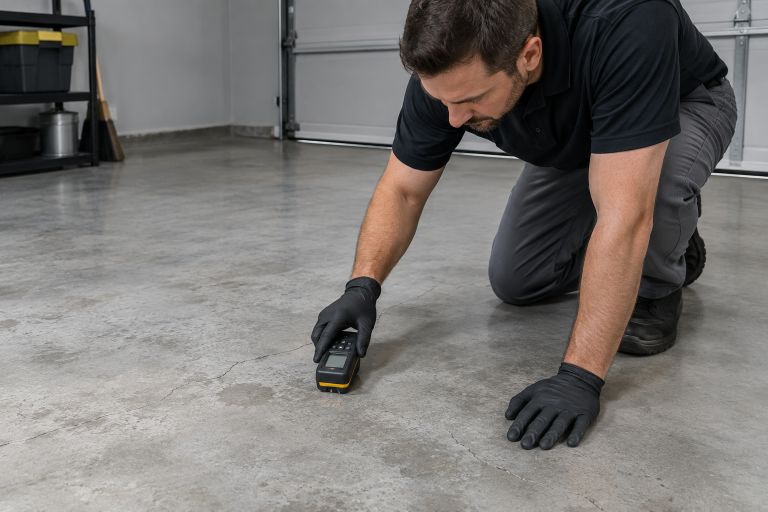
Before coating, inspect the bare slab closely. Look for cracks, chipped edges, pits, flaking areas, powdery concrete, old paint, and peeling coatings. Dark patches may indicate dampness, while low spots can reveal where rainwater or vehicle runoff tends to stand. Oil stains and tire residue need attention because a coating must bond to sound, clean concrete. A floor can look clean yet still have a moisture issue below the surface. Old coatings deserve special scrutiny. If they are loose, bubbled, or separating from the slab, applying a new system over them may transfer the existing failure to the new finish.
Garage Floor Coating Types Compared
Epoxy
Epoxy is widely used for garage floors because it can create a hard, decorative surface with good resistance to many common garage spills. It is available in solid colors and flake finishes. Installation conditions matter, and epoxy exposed to substantial sunlight is often paired with a UV-stable protective topcoat.
Polyaspartic and Polyurea
Polyaspartic coatings are known for relatively fast curing and are often selected for their UV resistance and everyday durability. Polyurea systems can offer flexibility and toughness. Both materials can have short working times, so careful mixing, timing, and application are essential for an even finish.
Sealed Concrete and Garage Tiles
Penetrating sealers and garage tiles may suit some budgets or temporary needs, but they do not perform the same role as a full bonded coating system. A sealer can reduce absorption without concealing extensive damage. At the same time, tiles can change the appearance of a floor but may require attention beneath or around their edges when water and debris accumulate.
Why Moisture Testing Comes First
Concrete is porous, and moisture vapor can move through it. A dense coating installed on a slab with excessive moisture can lose adhesion, bubble, or peel. Visual inspection alone cannot reliably determine whether the slab is suitable for a particular coating system. Professional testing helps an installer decide whether the floor needs a moisture-control primer, drainage improvements, or another approach. Good garage moisture control begins with limiting water entry, addressing leaks, maintaining drainage, and allowing damp areas to dry. The main ways to control moisture in your home also support sensible garage planning, especially when humidity, seepage, or wet materials are recurring issues.
Surface Preparation Steps That Matter
The visible finish is only part of the job. Long-term performance relies heavily on the bond created before the first coat is installed. A thorough process commonly includes:
- Removing oil, dirt, paint, residue, and weak concrete.
- Mechanically profiling the slab through grinding or another suitable method.
- Repairing cracks, pits, joints, and damaged edges with compatible materials.
- Cleaning the surface and confirming that it meets the coating system’s requirements.
- Applying a suitable primer or moisture-control layer when testing indicates it is needed.
- Installing the base coat, decorative flakes, or other finish layer, and protective topcoat.
- Allowing the floor to cure before returning it to foot traffic and vehicle use.
Coating over glossy paint, contamination, or failing material can create an attractive short-term surface with a weak foundation. During remodeling, controlling dust, moisture, and material disturbance also helps protect the broader indoor environment, as explained in guidance on addressing indoor environmental concerns during remodeling.
Choosing Texture, Color, And Slip Resistance
Color and texture should support how the garage is used. Decorative flakes can help disguise dust and minor debris better than a uniform glossy color. Muted gray, tan, and blended finishes often work well with Chesapeake homes because they complement stored equipment, cabinets, and vehicles without making every tire mark obvious. Texture deserves equal attention. A garage used for woodworking, gardening, or wet outdoor gear may benefit from more traction than a simple parking area. The goal is to finish with a practical grip that remains manageable for sweeping and mopping. Discuss wet-floor safety before installation, especially around exterior doors and utility areas.
Questions To Ask Before Hiring an Installer
- How will the concrete be tested for moisture?
- What mechanical preparation method will be used?
- How will cracks, pits, joints, and old coatings be repaired?
- Which materials are included in the complete coating system?
- Is the topcoat suitable for UV exposure near an open garage door?
- What texture options are available for slip resistance?
- How long will the garage be unavailable for vehicles?
- What does the written warranty cover, and how are future repairs handled?
Simple Care After Installation
Sweep sand and grit regularly to reduce scratching, and clean spills before they sit for extended periods. Use a mild cleaner approved for the coating, rather than abrasive pads or metal scraping tools. Place protective pads beneath heavy stands, jacks, and equipment. Keep water from pooling at the entry, check under mats for trapped dampness, and inspect the floor twice yearly for chips, cracks, staining, or separation.
Final Takeaway
A durable Chesapeake garage floor begins with the concrete beneath it. Moisture testing, careful preparation, compatible materials, useful traction, and straightforward maintenance all matter when choosing and installing a garage floor coating. Homeowners should also consider how the garage is used, including vehicle traffic, storage, workshop activities, cleaning routines, and exposure to water, dirt, or automotive fluids. Surface preparation can affect how well a coating adheres, while the right finish can help balance appearance, durability, cleaning, and slip resistance. Local weather conditions and seasonal changes may also influence moisture and temperature conditions around the garage. The best coating is the one that matches the home’s local conditions, the slab’s needs, and the way the garage is actually used every week. Taking time to evaluate these factors before installation can help homeowners choose a practical flooring system and set realistic expectations for its long-term care.