- Table of Contents
- Why Winter Preparation Matters
- How Local Road Conditions Can Change
- The 2026 Winter Vehicle Checklist
- Winter Tires, Tread, and Tire Pressure
- Why Tire Choice Matters
- What to Check
- Safe Driving Habits for Snow and Ice
- What to Do During a Skid
- What to Keep in a Winter Emergency Kit
- Ways to Protect the Vehicle
- What to Do After a Winter Collision
- When to Review Auto Insurance Coverage
- Common Questions About Winter Driving
- When should winter tires be installed?
- Should a vehicle be warmed up before driving?
- What if the road looks clear but feels slippery?
- Final Thoughts
Table of Contents
- Introduction
- Why Winter Preparation Matters
- How Local Road Conditions Can Change
- The 2026 Winter Vehicle Checklist
- Winter Tires, Tread, and Tire Pressure
- Safe Driving Habits for Snow and Ice
- What to Keep in a Winter Emergency Kit
- Ways to Protect the Vehicle
- What to Do After a Winter Collision
- When to Review Auto Insurance Coverage
- Common Questions About Winter Driving
- Final Thoughts
Winter in Niagara Falls, Ontario, can turn an ordinary commute, school run, or trip across town into a drive that demands more planning. Snow, slush, freezing rain, wind, and changing visibility all affect how a vehicle handles. Preparing the vehicle, adjusting driving habits, and reviewing Niagara Falls auto insurance needs before winter arrives can help drivers feel better prepared for seasonal surprises.
The safest approach is simple: give yourself more time, give other road users more space, and avoid assuming a familiar route will have familiar conditions. A clear road can become slick near a bridge, shaded intersection, or busy stop-and-go area.
Why Winter Preparation Matters
Cold temperatures and slippery surfaces can reduce grip, while snow or blowing snow can limit the time available to recognize a hazard. That means safe winter driving depends on more than simply owning a reliable vehicle. It also depends on tire condition, visibility, braking technique, speed, following distance, and a driver’s willingness to delay a trip when conditions become unsafe.
Speed limits apply to ideal conditions, not every snow squall or icy morning. Reducing speed before a turn, intersection, or hill gives the tires more opportunity to maintain traction and gives the driver more time to react.
How Local Road Conditions Can Change
Niagara Falls roads can change character during a single drive. Packed snow may become slush, slush can refreeze, and pooled water can create a hydroplaning risk. Black ice is especially difficult because it may blend into the pavement. Drivers should be particularly alert at bridges, ramps, intersections, shaded streets, and locations where melted snow can refreeze.
The City’s safe winter driving guidance reinforces practical habits, including clearing snow from the entire vehicle, slowing down, and leaving extra stopping space. In February 2026, the City also advised that a road salt shortage could lead to wider use of sand-and-salt mixtures and more frequent plowing, a reminder that maintenance conditions can vary during unusual weather events.
The 2026 Winter Vehicle Checklist
Complete a basic inspection before regular freezing weather arrives, then repeat key checks throughout the season.
- Test the battery and inspect terminals for corrosion or loose connections.
- Top up washer fluid with a product rated for freezing temperatures.
- Replace worn, streaking, or damaged wiper blades.
- Check headlights, brake lights, turn signals, and hazard lights.
- Arrange an inspection if the brakes pull, vibrate, squeal, or feel inconsistent.
- Look for visible leaks, damaged hoses, and worn belts.
- Have exhaust concerns addressed promptly.
- Keep enough fuel for delays, detours, or an unexpected stop.
Winter Tires, Tread, and Tire Pressure
Why Tire Choice Matters
Winter tires are designed for cold-weather driving and can provide better traction on snow and ice than tires intended mainly for mild conditions. Install a matching set of four tires to improve the vehicle’s handling and braking. Mixing tire types can create uneven traction between the vehicle’s front and rear.
What to Check
- Check tread depth and look for uneven wear.
- Inspect sidewalls for cracks, bulges, or punctures.
- Check tire pressure when the tires are cold and follow the vehicle manufacturer’s recommended pressure.
- Confirm the spare tire is usable, or understand how the vehicle’s emergency tire kit works.
Safe Driving Habits for Snow and Ice
- Slow down before reaching a slippery stretch of road.
- Increase following distance well beyond what feels necessary on dry pavement.
- Brake earlier and use smooth, steady pressure.
- Avoid abrupt steering, acceleration, and braking.
- Use low-beam headlights when snowfall, fog, or spray reduces visibility.
- Keep both hands available for steering and avoid distractions.
- Do not use cruise control on slippery roads.
- Pull over in a safe location if visibility becomes too poor to continue.
What to Do During a Skid
Stay calm, ease off the accelerator, and look toward the open path where you want the vehicle to travel. Steer smoothly and avoid jerking the wheel or making repeated sharp corrections. Sudden braking can worsen a skid when traction is limited.
What to Keep in a Winter Emergency Kit
A compact kit can make a roadside delay safer and more manageable. Keep warm clothing, gloves, a hat, sturdy footwear, a blanket, water, shelf-stable snacks, a flashlight, a phone charger or power bank, first-aid supplies, an ice scraper, a snow brush, a small shovel, jumper cables or booster pack, and a traction aid such as sand or non-clumping cat litter. Reflective warning equipment can also help make a stopped vehicle easier to notice.
Ways to Protect the Vehicle
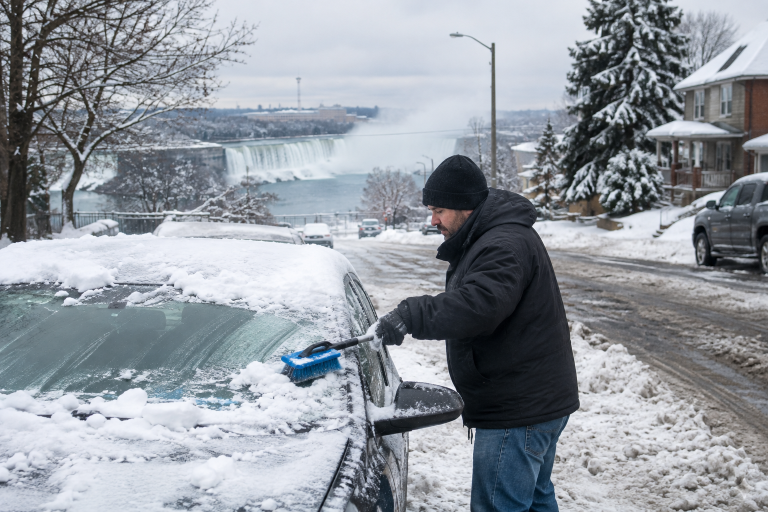
Before leaving, remove snow and ice from windows, mirrors, lights, roof, hood, trunk, and license plates. Snow left on the roof can slide onto the windshield during braking or blow onto another vehicle. Clear snow away from the exhaust outlet before starting the engine, and check the weather and route before setting out.
During the season, wash away road salt and grime when conditions permit, paying attention to wheel wells and the underside. Avoid parking beneath heavy overhangs or where falling ice may be a concern. A windshield cover or sheltered parking spot can also make early-morning preparation faster.
What to Do After a Winter Collision
If a collision occurs, move to a safe location when possible, turn on hazard lights, and call emergency services if anyone is injured or the scene is unsafe. Exchange contact and insurance information, take photos of the vehicles, road surface, signs, and visible damage, and collect witness details when available. Avoid admitting fault at the scene. Report the incident to the appropriate authority and insurer when required.
When to Review Auto Insurance Coverage
Winter is a useful time to check whether an auto policy still fits the vehicle and household. Consider liability limits, collision coverage, comprehensive coverage for certain non-collision losses, rental vehicle or loss-of-use options, and the deductible amount. A review is especially sensible after buying or selling a vehicle, changing a commute, adding a driver, moving, or changing annual mileage.
Common Questions About Winter Driving
When should winter tires be installed?
Install them before sustained cold temperatures and regular snow arrive, rather than waiting for the first major storm. Follow the tire manufacturer’s guidance and book service early if seasonal appointments fill up quickly.
Should a vehicle be warmed up before driving?
A short warm-up can help with comfort and frost removal, but the vehicle should never be left unattended while running. Clear all snow and ice before driving away.
What if the road looks clear but feels slippery?
Reduce speed, increase following distance, and avoid sudden inputs. Treat the surface as potentially icy, particularly near bridges, shaded areas, intersections, and large puddles.
Final Thoughts
Winter-ready driving in Niagara Falls comes down to consistent habits. Maintain the vehicle, use suitable tires, clear every surface before driving, pack practical emergency supplies, and make careful decisions when the weather changes. Small preparations can make winter travel calmer, safer, and less stressful.