A small room isn’t a fixed limitation — much of how spacious a space feels comes down to choices that have nothing to do with square footage. Colour, light, furniture placement, and a few visual tricks can make a compact room feel noticeably larger without knocking down a single wall.
- Use Light, Cool Colours
- Don’t Fear a Little Contrast
- Maximise Natural Light
- Add Mirrors Strategically
- Choose Furniture Scaled to the Room
- Multi-Functional Pieces Save Space
- Keep Sightlines Clear
- Float Furniture Away From Walls, Selectively
- Use Vertical Space
- Reduce Visual Clutter
- Edit, Don’t Just Organise
- Use Rugs and Flooring to Extend the Space
- Small Changes, Real Impact
Use Light, Cool Colours
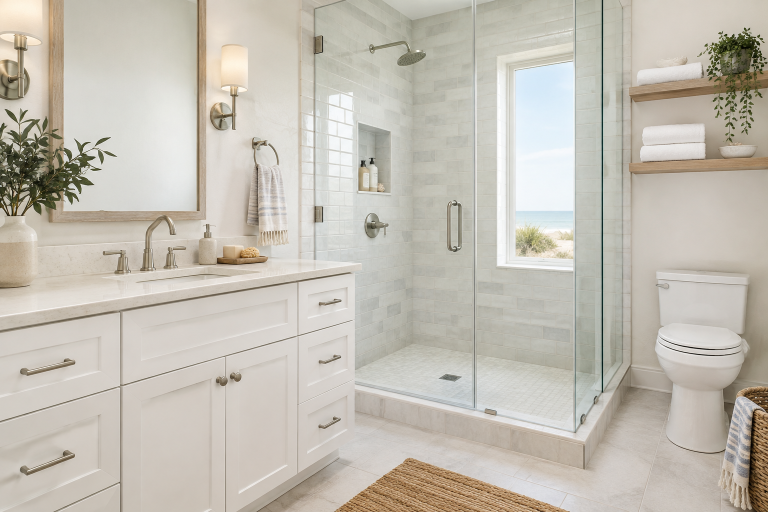
Light colours reflect more light and create fewer visual boundaries than dark ones, which is why pale walls tend to make a room feel more open. Whites, soft greys, and pale neutrals work particularly well, especially when carried across walls, trim, and ceiling for a seamless look.
Don’t Fear a Little Contrast
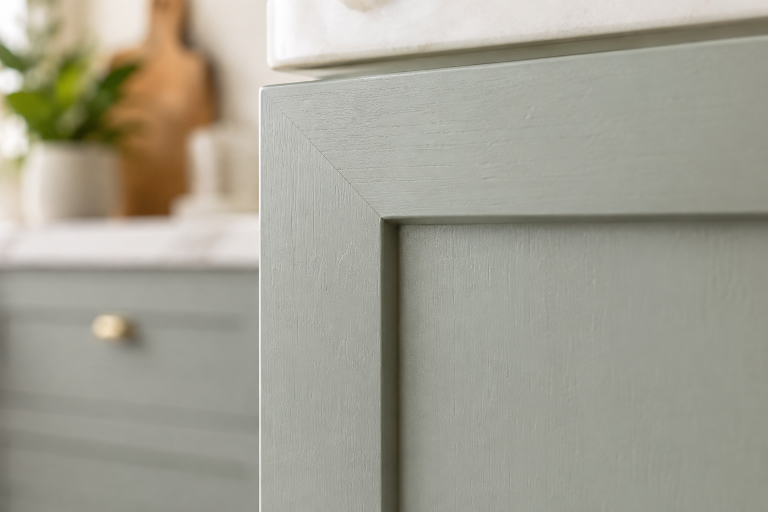
A small room doesn’t need to be entirely white to feel spacious — a slightly deeper accent, used sparingly, can add depth without closing the space in. The goal is avoiding heavy, saturated colour across every surface, not avoiding colour altogether.
Maximise Natural Light
Light is one of the strongest tools for making a room feel bigger. Keep windows unobstructed, use sheer or lightweight curtains instead of heavy drapes, and avoid furniture that blocks a window’s light from reaching the rest of the room.
Add Mirrors Strategically
A well-placed mirror reflects light and visually doubles a room’s apparent depth. Positioning one opposite a window, or on a wall that reflects an open sightline, has an outsized effect for very little cost.
Choose Furniture Scaled to the Room
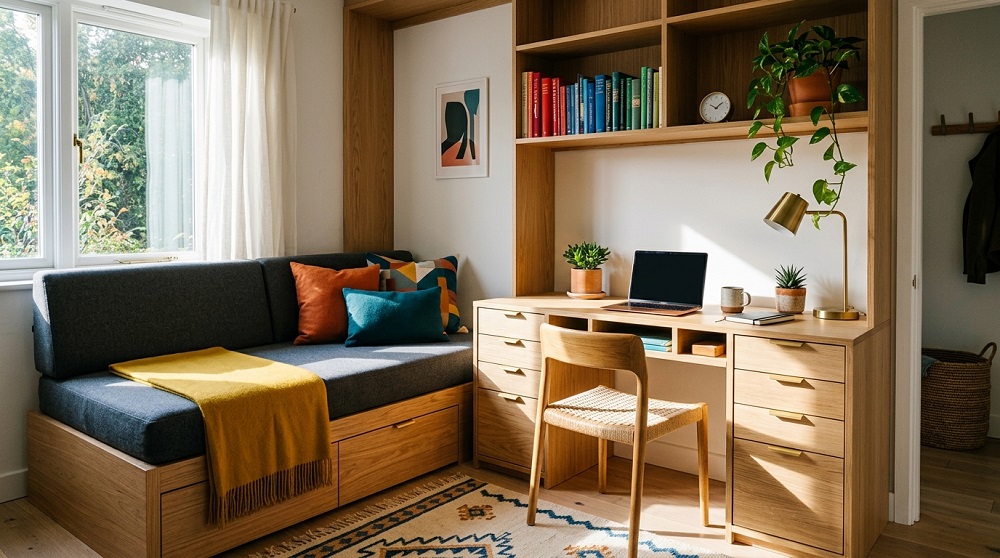
Oversized furniture is one of the fastest ways to make a small room feel cramped, regardless of colour or lighting. Choose pieces scaled appropriately — a sofa with visible legs rather than a boxy base, a table sized for the space rather than the largest one that technically fits.
Multi-Functional Pieces Save Space
Furniture that serves more than one purpose — a storage ottoman, a bed with drawers underneath, a fold-down desk — reduces the total number of pieces needed in a room, which keeps the floor space feeling open.
Keep Sightlines Clear
A room feels larger when the eye can travel across it uninterrupted. Position furniture to leave a clear path from the entrance through the main sightline, rather than blocking the view with a piece placed in the middle of the room.
Float Furniture Away From Walls, Selectively
Counterintuitively, pulling a piece slightly away from the wall can sometimes create better flow than pushing everything to the perimeter, particularly in a room with an awkward shape. Test a few arrangements rather than assuming the wall-hugging default is always best.
Use Vertical Space
Floor space is limited in a small room, but wall height rarely is. Tall bookshelves, wall-mounted storage, and curtains hung close to the ceiling rather than just above the window frame all draw the eye upward, making the room feel taller and by extension more spacious.
Reduce Visual Clutter
A small room with a lot of visible objects reads as smaller than it is, regardless of the actual floor area. Closed storage, fewer decorative objects displayed at once, and cable management all reduce the visual noise that makes a compact space feel chaotic.
Edit, Don’t Just Organise
Storing everything neatly still counts as clutter if there’s simply too much in the room. Removing items entirely — not just tidying them away — often does more for the sense of space than any organisational system.
Use Rugs and Flooring to Extend the Space
A rug that’s too small for the furniture arrangement breaks up the floor and makes a room feel choppier than it is. Sizing a rug so the furniture sits at least partially on it helps unify the space and creates the impression of one continuous area rather than several small ones.
Small Changes, Real Impact
None of these adjustments require structural work. Colour, light, furniture scale, and a bit of editing consistently make more difference to how spacious a room feels than its actual dimensions ever will.