Seasonal transitions are usually the messiest weeks in anyone’s wardrobe — too warm for last month’s layers, too cool for what’s ahead. Handled well, the shift doesn’t need a full wardrobe overhaul, just a few smart adjustments to what you already own.
- Build Around Layering, Not Replacing
- Choose Transitional Fabrics
- Rotate, Don’t Fully Swap, Your Closet
- Identify Your Transitional Workhorses
- Adjust Colour Palette Gradually
- Use Accessories to Adjust Faster Than Clothing
- Do a Seasonal Edit, Not Just a Swap
- Store Off-Season Items Properly
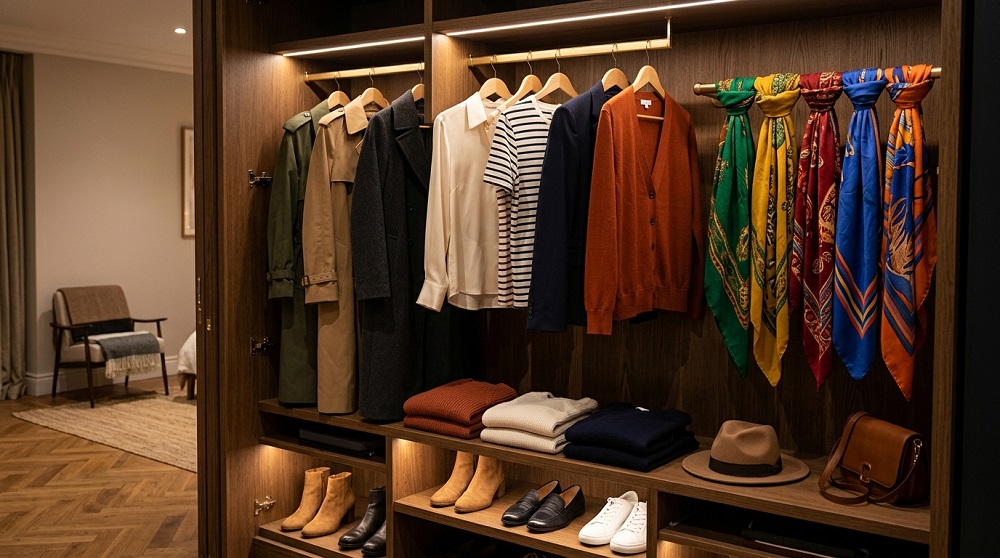
- Keep a Small “In-Between” Section
- A Smoother Shift Each Time
Build Around Layering, Not Replacing
The simplest way to bridge two seasons is layering rather than swapping entire outfits. A lightweight base piece works alone in warmer weather and gains a jacket, cardigan, or scarf as temperatures drop — one item doing the work of two.
Choose Transitional Fabrics
Lightweight wool, cotton blends, and mid-weight denim handle temperature swings better than pure summer or deep-winter fabrics. Stocking a few of these bridges the gap without needing season-specific pieces for every fluctuating week.
Rotate, Don’t Fully Swap, Your Closet
Packing away an entire season’s clothes at once often means missing the unpredictable days that don’t match the calendar. Instead, rotate gradually: move out the most extreme pieces (heavy coats, tank tops) first, and keep mid-weight items accessible year-round.
Identify Your Transitional Workhorses
A handful of pieces do most of the heavy lifting during seasonal shifts:
- A medium-weight jacket or trench that works over light layers
- A cardigan or light knit for cooler mornings and evenings
- Ankle boots or trainers that suit both mild warmth and light cold
- Trousers in a mid-weight fabric that aren’t tied to a single season
Owning a few well-chosen versions of each covers most transitional weather without needing a separate outfit for every temperature.
Adjust Colour Palette Gradually
Wardrobes often shift tone with the seasons — lighter, brighter colours in warmer months, deeper and muted tones in cooler ones. Introducing this gradually, rather than switching all at once, keeps the transition feeling natural and lets you keep wearing pieces slightly outside their “expected” season.
Use Accessories to Adjust Faster Than Clothing
Swapping a full outfit for the weather is slower and less flexible than adjusting accessories. A scarf, a light jacket, or a change of shoes shifts an outfit’s warmth and formality far faster than rebuilding it from scratch, and it lets one core outfit stretch across a wider temperature range.
Do a Seasonal Edit, Not Just a Swap
Each transition is a natural point to review what’s actually being worn. As you rotate pieces in and out, set aside anything that didn’t get worn last season, doesn’t fit, or feels outdated. This keeps the wardrobe lean and makes the next transition easier, since there’s less to sort through.
Store Off-Season Items Properly
Clean pieces before storing them — stains set over months and attract pests. Use breathable garment bags for structured items and keep everything somewhere dry to avoid damage between seasons.
Keep a Small “In-Between” Section
Rather than fully separating summer and winter clothes, keep a dedicated section for pieces that work across both — mid-weight layers, transitional shoes, versatile accessories. This becomes the first place to look during the unpredictable weeks when the calendar and the weather don’t agree.
A Smoother Shift Each Time
The wardrobes that transition most smoothly aren’t the largest ones — they’re the ones built with layering, mid-weight pieces, and flexible accessories in mind from the start. A few thoughtful transitional items do more for a seasonal shift than swapping the entire closet twice a year ever will.