- Key Takeaways
- Table Of Contents
- What A Slow Drain Can Tell You
- Common Causes Of Slow Drains
- How To Tell Where The Clog Is
- Safe Steps For Minor Drain Problems
- Why Chemical Drain Cleaners Need Caution
- Warning Signs Of A Larger Plumbing Issue
- Ways To Prevent Future Clogs
- When To Seek Professional Help
- Common Questions About Slow Drains
- Can A Slow Drain Fix Itself?
- Is Boiling Water Safe For Every Drain?
- Why Do Several Drains Slow Down At Once?
- Are “Flushable” Wipes Safe For Plumbing?
- Conclusion
Key Takeaways
-
Slow drainage usually indicates a partial blockage somewhere in the plumbing system.
-
Hair, grease, soap residue, food debris, mineral buildup, and tree roots are common causes.
-
One affected fixture often points to a local clog, while several affected fixtures can indicate a deeper problem.
-
Simple mechanical methods may help with minor clogs, but harsh chemical cleaners can pose safety risks.
-
Gurgling, sewage odors, repeated backups, and standing water deserve prompt attention.
Table Of Contents
-
What A Slow Drain Can Tell You
-
Common Causes Of Slow Drains
-
How To Tell Where The Clog Is
-
Safe Steps For Minor Drain Problems
-
Why Chemical Drain Cleaners Need Caution
-
Warning Signs Of A Larger Plumbing Issue
-
Ways To Prevent Future Clogs
-
When To Seek Professional Help
-
Common Questions About Slow Drains
What A Slow Drain Can Tell You
A slow sink, shower, or tub drain is easy to dismiss, especially when water still eventually goes down. In many Logan homes, though, reduced flow is an early warning that debris is catching inside the drain or pipe. Addressing the issue early can be less disruptive than waiting for a complete backup that affects a bathroom, kitchen, or laundry area.
When a fixture needs more thorough attention, professional drain cleaning in Logan Utah, can help determine whether the restriction is near the drain opening or farther along the plumbing line. Pay attention to changes beyond water speed, including unpleasant odors, bubbling water, or gurgling noises after the fixture is used.
For example, a shower may begin with a small puddle around the bather’s feet. Over time, hair and soap residue can accumulate, causing the water to drain more slowly until the shower pan holds water long after the faucet is turned off. That pattern is useful information, not merely an inconvenience.
Common Causes Of Slow Drains
The likely cause often depends on where the problem appears. Bathroom sink drains commonly collect hair, toothpaste, soap residue, and shaving debris. Showers and tubs tend to develop clogs from hair, body oils, soap scum, and mineral deposits.
Kitchen drains face a different mix of materials. Grease and cooking oil can coat pipe walls after cooling, while food scraps, coffee grounds, rice, pasta, and other starchy foods may contribute to a blockage. Toilets can clog when too much paper is used at once or when wipes, hygiene products, paper towels, or small objects are flushed.
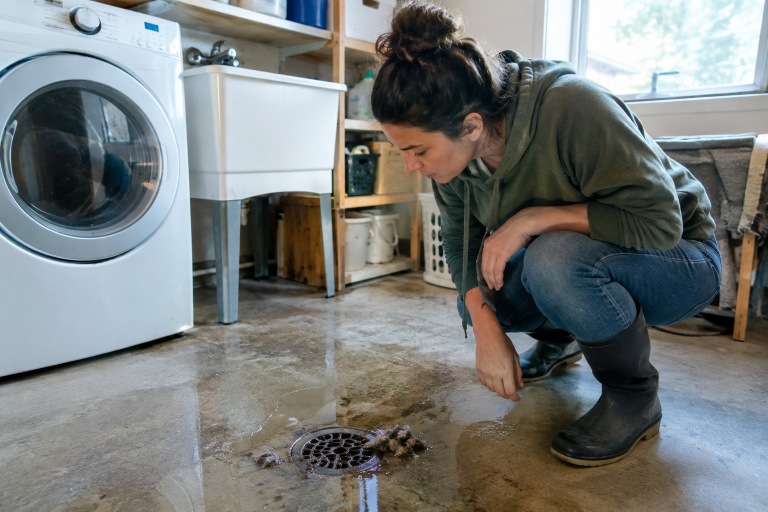
Floor drains in laundry rooms, garages, and utility spaces may collect lint, dirt, sediment, and other debris. A restriction deeper in a main drain line can involve heavy buildup, pipe scale, root intrusion, or a damaged section of pipe.
How To Tell Where The Clog Is
The number and location of affected fixtures can help narrow down the source. One slow bathroom sink usually suggests a nearby obstruction, while a slow shower, a gurgling toilet, and water appearing in a tub may indicate that several fixtures share a restricted path.
-
Check how many fixtures are affected. A single slow fixture is often a local issue.
-
Notice connected plumbing. A kitchen sink and dishwasher may share part of the same drain route.
-
Listen for gurgling. Air struggling to move through the system can accompany restricted flow or a venting issue.
-
Watch for unexpected backups. Water rising in a lower drain while another fixture runs is a serious clue.
-
Track repeat clogs. A drain that clears briefly but clogs again may have a deeper cause.
Safe Steps For Minor Drain Problems
For a minor, isolated clog, start with low-risk steps. Remove visible debris from the stopper or drain opening, then rinse and replace a strainer that catches hair or food particles before they enter the pipe. A sink or tub plunger can also help when there is enough water to form a seal around the cup.
-
Use firm, controlled plunging strokes rather than excessive force.
-
Cover a nearby overflow opening when plunging a sink or tub.
-
Clean an accessible sink trap only if it can be done safely, and a container is placed underneath.
-
Stop if water rises, a leak appears, or the fixture does not improve.
Why Chemical Drain Cleaners Need Caution
Chemical drain cleaners may not remove the entire obstruction, particularly when the clog is caused by dense hair, an object, roots, or buildup farther down the line. They can also create burn and splash hazards, release irritating fumes, and leave reactive material inside the plumbing. Never mix drain products with bleach, acids, or other cleaners. If a chemical product has been used, tell any plumber before work begins so they can take appropriate precautions.
Warning Signs Of A Larger Plumbing Issue
Call for help promptly when several drains slow at once, toilets gurgle while other fixtures run, sewage odors persist, or water backs up into a tub, shower, floor drain, or sink. Standing water that remains after basic plunging and clogs that return within days or weeks also warrant a closer inspection.
Homes with septic systems should take slow fixtures, damp ground near the system, and foul odors especially seriously. The signs of a septic system malfunction include slow drains, backups, gurgling plumbing, standing water, and sewage odors. During a sewage backup, stop using water fixtures, keep people and pets away from contaminated water, and avoid adding more drain chemicals.
Ways To Prevent Future Clogs
-
Use mesh strainers in sinks, showers, and tubs.
-
Let the grease cool, then place it in the trash rather than pouring it down the sink.
-
Scrape plates before washing them.
-
Flush only human waste and toilet paper.
-
Keep wipes, cotton swabs, paper towels, and hygiene products out of toilets.
-
Clean drain stoppers and strainers regularly.
-
Spread laundry loads across the week if the property uses a septic system.
-
Respond when drainage speed or plumbing sounds noticeably change.
When To Seek Professional Help
Professional service is often the safer choice for widespread, recurring, or stubborn clogs. Depending on the situation, a technician may use a drain snake, mechanical cleaning equipment, hydro-jetting, or a camera inspection. The appropriate method depends on the pipe material, the location and type of blockage, available access points, and the condition of the line. Ask what likely caused the clog and what practical changes may reduce repeat problems.
Common Questions About Slow Drains
Can A Slow Drain Fix Itself?
A small amount of debris may shift temporarily, but persistent slow drainage usually means buildup remains and should be addressed.
Is Boiling Water Safe For Every Drain?
Hot water may help loosen some grease or soap residue, but very hot water can be unsuitable for certain pipes, seals, and fixtures. Avoid assuming it is a universal solution.
Why Do Several Drains Slow Down At Once?
Multiple slow fixtures can indicate a shared branch line, a main drain restriction, a venting issue, or a sewer connection issue.
Are “Flushable” Wipes Safe For Plumbing?
Even products marketed as flushable can contribute to clogs when they do not break apart quickly enough in household plumbing.
Conclusion
Slow drainage offers an opportunity to act before a small restriction becomes a messy backup. By watching for patterns, using safer first steps, and getting help when symptoms spread or return, Logan homeowners can better protect their plumbing and keep everyday routines moving.