- Key Takeaways
- Table of Contents
- Why Repeated Repairs Deserve Attention
- How to Spot a Repair Pattern
- What to Save After Every Service Visit
- Documents and evidence worth keeping
- How Recalls and Service Bulletins Fit In
- What to Do When the Vehicle May Be Unsafe
- How to Communicate With a Dealer
- How to Build a Simple Repair Timeline
- Common Record-Keeping Mistakes
- When to Consider Further Help
Key Takeaways
- Repeated service visits can reveal a pattern, even if the repair orders list different parts or diagnoses.
- Detailed records help establish what happened, when it happened, how the vehicle was used, and whether repairs actually solved the problem.
- Save repair orders, invoices, messages, photos, towing bills, rental receipts, and recall notices in one organized location.
- Recalls, warranty repairs, service bulletins, and routine maintenance each serve different purposes.
- Potential safety problems deserve fast action, careful documentation, and professional evaluation.
- Vehicle protection rules vary by state, so deadlines and eligibility requirements should be reviewed before important records are lost or time passes.
Table of Contents
- Why Repeated Repairs Deserve Attention
- How to Spot a Repair Pattern
- What to Save After Every Service Visit
- How Recalls and Service Bulletins Fit In
- What to Do When the Vehicle May Be Unsafe
- How to Communicate With a Dealer
- How to Build a Simple Repair Timeline
- Common Record-Keeping Mistakes
- When to Consider Further Help
A new vehicle is expected to offer dependable transportation, so repeated repair visits can quickly become frustrating and expensive. Whether an owner is dealing with warning lights, loss of power, electrical glitches, unusual noises, or common Chevrolet problems, the best first step is to document each issue consistently.
One visit to the shop does not automatically mean a vehicle has a serious defect. Parts can fail, software may need updating, and a technician may need time to identify an intermittent concern. The situation becomes more significant when the same symptom recurs, several repairs involve the same system, or the car is unavailable for normal use for an extended period.
Why Repeated Repairs Deserve Attention
The number of service visits matters, but the impact of the problem matters too. A brief appointment for a minor trim noise is not the same as repeated stalling, brake concerns, steering problems, overheating, or a vehicle that cannot be safely driven. Owners should pay attention when repairs interrupt work, family obligations, medical appointments, or routine transportation.
Do not focus only on the name of a replacement part. A dealer may replace a sensor, module, wiring connector, or battery while attempting to resolve one underlying complaint. The clearer question is whether the symptom stopped after the repair. If it returns, the earlier repair order becomes important evidence of the continuing issue.
How to Spot a Repair Pattern
A repair pattern often emerges from symptoms and outcomes rather than from identical technician notes. Track what the vehicle did, the conditions when it happened, and what occurred after each repair. Warning signs can include:
- The same dashboard warning returns shortly after service.
- The vehicle receives multiple repairs for similar drivability, electrical, braking, or climate-control concerns.
- The issue occurs during ordinary driving rather than unusual use or extreme conditions.
- A repair order states that the dealer could not reproduce the concern, but the problem has recurred.
- The same type of component is replaced more than once.
- The vehicle stays at the shop for several days or weeks.
- A defect affects safe operation, including loss of power, unexpected stalling, smoke, steering difficulty, or brake performance.
What to Save After Every Service Visit
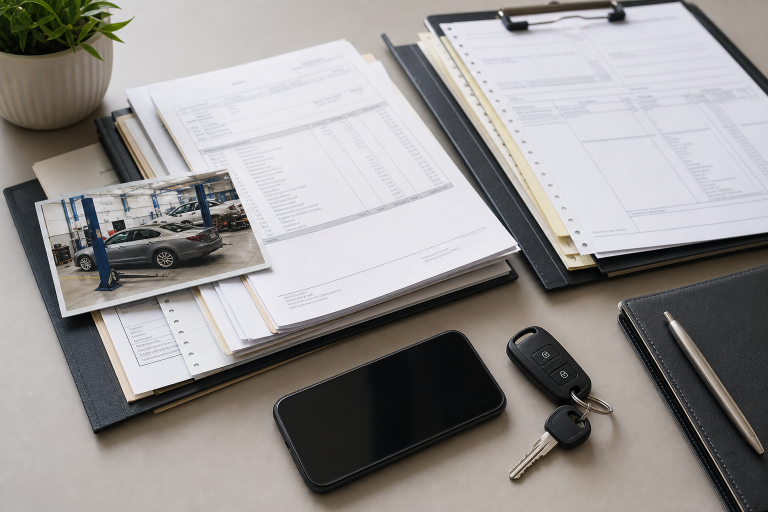
Strong records do not need to be complicated. Create a digital folder for the vehicle, then photograph or scan paperwork as soon as it is received. Keep the original documents when possible, especially if handwriting or dates are difficult to read in a photo.
Documents and evidence worth keeping
- Repair orders, final invoices, and warranty claim paperwork.
- Appointment confirmations, text messages, and emails.
- Photos or videos showing warning lights, leaks, damage, noises, or starting problems.
- Towing invoices, roadside-assistance records, rental bills, and rideshare receipts.
- Recall letters, service campaign notices, and warranty extension information.
- Personal notes listing the date, mileage, weather, speed, road conditions, and symptoms.
Before leaving the service department, read the repair order. Make sure it accurately describes the complaint, not just the technician’s conclusion. If the document says “customer states noise” but the actual concern was “vehicle shook and lost power at highway speed,” request a correction or submit a brief written note for the file.
How Recalls and Service Bulletins Fit In
A recall is different from a technical service bulletin. A recall generally addresses a safety-related defect or a failure to meet a federal motor-vehicle safety standard. A service bulletin usually gives technicians diagnostic or repair guidance for a known condition. It may help identify a problem, but it does not necessarily mean a free repair is available.
Owners can use the vehicle identification number recall search to check for open recalls and review safety-related information tied to their vehicle. A clean result does not prove that no defect exists. Some patterns appear in owner complaints and dealership records long before a formal recall is announced.
What to Do When the Vehicle May Be Unsafe
Safety should come before convenience. If the vehicle stalls in traffic, loses power, overheats, develops a serious brake or steering concern, or displays a warning directing the driver to stop, pull over when it is safe to do so. Avoid test-driving a vehicle simply to reproduce a dangerous issue.
- Move to a safe location if possible.
- Photograph dashboard messages, warning lights, and visible conditions.
- Record the time, date, mileage, location, and driving conditions.
- Use roadside assistance or a tow when continued driving could create a risk.
- Ask the repair facility to document the safety concern in specific terms.
- Save every towing, transportation, and rental receipt.
How to Communicate With a Dealer
Clear, factual communication helps the service department diagnose the right concern. Describe what happened instead of guessing at the cause. For example, “The engine shut off twice while turning left after twenty minutes of driving” gives a technician more useful information than “the engine is broken.”
Ask what caused the issue, what repair was performed, whether the vehicle was tested under similar conditions, whether parts are delayed, and what to do if the symptom returns. After a phone conversation, a short email summarizing the discussion can provide a helpful written record without unnecessarily escalating the situation.
How to Build a Simple Repair Timeline
A timeline turns scattered paperwork into a clear history. For each visit, record the exact date, mileage, complaint, repair outcome, and total number of days the vehicle was unavailable. For example, an entry might read: “March 4, 2026, 8,420 miles, vehicle lost power during normal driving, software update performed, two days out of service.” A later entry should note whether the same symptom returned.
Use exact dates and mileage whenever possible. Memory becomes less reliable after several appointments, particularly when different employees, repair orders, or explanations are involved.
Common Record-Keeping Mistakes
Many owners save receipts but lose the details needed to explain the bigger story. Common mistakes include throwing away repair orders, relying solely on a vehicle history report, failing to count days in the shop, describing the same symptom differently at every visit, and posting online without preserving official documents. Small issues should also be documented early, before they become more severe or harder to connect to earlier repairs.
When to Consider Further Help
Additional guidance may be useful when repairs continue without a lasting solution, a dealer refuses to accurately record the complaint, a safety issue affects daily driving, or transportation costs are mounting. State vehicle protection laws vary, and eligibility can depend on the vehicle’s age, mileage, warranty status, repair attempts, days out of service, and the type of defect.
Repeated trips to the repair shop can be discouraging, but organized records replace guesswork with a clear factual history. Save every document, track symptoms consistently, check for safety-related notices, and act before potential deadlines pass. The most useful evidence is often the simplest: a complete timeline showing what happened, what was attempted, and whether the vehicle was actually fixed.