
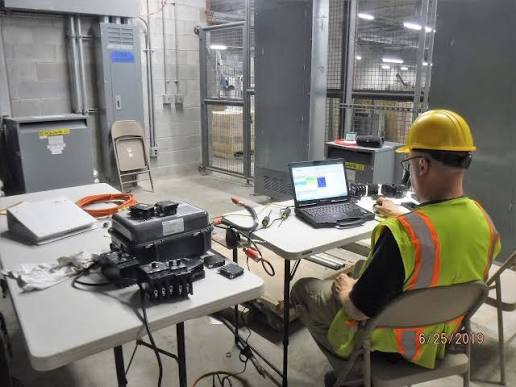
Defense primes often enter federal programs with subcontracting commitments that must be supported by real work, not just proposal language. Small business and Service-Disabled Veteran-Owned Small Business participation can affect acquisition strategy, subcontracting plans, reporting, and the strength of a team’s approach. Through defined work packages, Navigator International can support that effort by pairing relevant defense and construction capabilities with scopes that are clear enough to perform, track, and document.
- Workshare Planning Turns Goals Into Real Subcontract Opportunities
- Verified Business Status Protects the Prime’s Subcontracting Credit
- Technical Capability Makes Small Business Participation More Useful
- Overseas Reach Supports Hard-to-Place Work Packages
- Clear Documentation Keeps Participation Visible After Award
- Timely Payment and Communication Strengthen Small Business Performance
- Repeatable Teaming Builds Stronger Future Subcontracting Plans
Workshare Planning Turns Goals Into Real Subcontract Opportunities
Prime contractors first need to identify portions of the program that a qualified small business can perform without creating unnecessary handoffs. Construction support, logistics, procurement, engineering assistance, sustainment, training, and field coordination may become practical subcontract areas when scope boundaries are defined early.
Proposal teams gain more value from realistic workshare than from assigning a small percentage at the end of bid preparation. Specific tasks, labor categories, locations, deliverables, and estimated dollars make participation easier to price and manage. Experience associated with Navigator International Government construction can fit programs where federal facility work, overseas support, or mission-driven infrastructure requires a subcontractor that understands government expectations.
Verified Business Status Protects the Prime’s Subcontracting Credit
Federal subcontracting plans separate goals for small business and several socioeconomic categories, including SDVOSBs. Contract teams therefore need representations, registration information, applicable size status, and other required documentation before assuming that an award will count toward a particular goal.
Compliance staff should also confirm that status remains valid for the work being awarded rather than relying on an old capability statement. Accurate records help the prime support internal reporting and respond to government reviews. Company materials identify Navigator International as a Service-Disabled Veteran-Owned Small Business, giving defense primes a potential SDVOSB teaming option when current eligibility and the acquisition requirements align.
Technical Capability Makes Small Business Participation More Useful
Evaluators and program managers care about who will actually perform the work after award. A subcontractor with relevant personnel, processes, facilities, and management experience can take ownership of a defined requirement instead of serving only as a name on an organizational chart.
Complex defense programs may need support that crosses several disciplines during the same period. Capabilities under Navigator International Global Construction can complement broader prime-contractor teams where sourcing, construction coordination, logistics, technical support, and overseas execution overlap. Strong technical alignment gives the prime a better basis for assigning meaningful dollars to a small business while protecting schedule and performance.
Overseas Reach Supports Hard-to-Place Work Packages
International defense projects can make small-business participation harder because subcontractors may need regional suppliers, local knowledge, export awareness, secure transportation, or personnel willing to work far from U.S. offices. Those demands reduce the pool of firms able to accept field responsibility without extensive support from the prime.
Regional capability changes that calculation. Nav Int can support global construction and international construction activities that involve overseas material movement, project coordination, and government-facing requirements. Assigning suitable remote work to a capable subcontractor can help a prime pursue participation goals while keeping responsibilities close to the people actually managing the location.
Clear Documentation Keeps Participation Visible After Award
Subcontracting goals do not end when the proposal is accepted. Primes need systems that capture awards, modifications, invoices, performance periods, and subcontractor classifications so reported achievements reflect what occurred during contract execution.
Program controls become especially important when work moves through task orders, options, or several geographic areas. Clean purchase orders, subcontract values, scope descriptions, and payment records make it easier to reconcile reported dollars with accounting data. Defined Navigator International Construction Company work packages can give prime contractors a clearer trail for performance and subcontracting records.
Timely Payment and Communication Strengthen Small Business Performance
Current federal policy expects prime contractors to provide small businesses the maximum practicable opportunity to participate and includes attention to timely subcontractor payment. Slow approvals or unclear invoicing procedures can strain smaller firms because payroll, travel, materials, and supplier deposits may come due before the prime receives every downstream document.
Commercial managers can reduce that pressure by setting billing formats, approval contacts, dispute procedures, and submission calendars before field activity grows. Predictable communication also gives subcontractors time to flag staffing or supply issues before they affect milestones. Government construction teams benefit when commercial administration supports the same workshare commitments described during proposal development.
Repeatable Teaming Builds Stronger Future Subcontracting Plans
Past performance with a small business can make future planning more credible because the prime has actual records showing what the partner handled and how well it performed. Successful work packages may reveal additional areas that can be competed or assigned to qualified small businesses on later task orders and related programs.
Long-term relationships should still be based on capability, price, compliance, and mission fit rather than category status alone. Used thoughtfully, Navigator International can help defense primes connect SDVOSB participation with useful construction, logistics, engineering, training, sustainment, and overseas support. That combination gives teams a practical way to pursue small-business goals while keeping subcontracted work tied to measurable program needs and accountable delivery.