
Artificial intelligence used to sound like a distant, futuristic concept. Now it’s quietly embedded in tools most people use dozens of times a day — often without noticing it’s there at all. The shift hasn’t been one dramatic leap but a steady stream of small, practical improvements across the technology already in daily use.
- Smarter Personal Assistants
- Fewer Misunderstandings, More Natural Interaction
- Personalised Recommendations Everywhere
- The Trade-Off Worth Noticing
- Photography Transformed by Computational Processing
- Real-Time Translation and Accessibility Tools
- Broader Accessibility Gains
- Predictive Text and Writing Assistance
- Smarter Home Devices
- Fraud Detection and Security
- Health and Fitness Monitoring
- A Gradual, Cumulative Shift
Smarter Personal Assistants
Voice assistants have moved well beyond setting timers and checking the weather. Modern AI-driven assistants understand context across a conversation, follow up on earlier requests, and handle increasingly complex, multi-step instructions rather than requiring rigid, exact phrasing.
Fewer Misunderstandings, More Natural Interaction
Improvements in natural language understanding mean these tools now handle accents, interruptions, and casual phrasing far better than earlier versions, making them genuinely useful rather than a novelty.
Personalised Recommendations Everywhere
Streaming services, shopping platforms, and social media all rely on AI to analyse behaviour and surface content likely to be relevant. This isn’t limited to entertainment — recommendation systems now influence what news is seen, what products appear first in search results, and what routes a navigation app suggests.
The Trade-Off Worth Noticing
These systems optimise for engagement, which doesn’t always align with what’s most useful or accurate. Being aware of how recommendations are generated helps users interpret them more critically rather than assuming they reflect a neutral or complete picture.
Photography Transformed by Computational Processing
Smartphone cameras rely heavily on AI processing rather than hardware alone. Features like automatic scene recognition, low-light enhancement, and portrait-mode background blur are computed rather than purely optical, letting relatively small camera sensors produce results that would have required significantly larger hardware in the past.
Real-Time Translation and Accessibility Tools
AI-powered translation, once stiff and often inaccurate, now handles conversational speech in near real time across dozens of languages, changing how people communicate while travelling or working across language barriers.
Broader Accessibility Gains
Beyond translation, AI now powers live captioning, screen readers with more natural voice output, and tools that describe images for visually impaired users — technology that meaningfully expands independence for people who rely on it daily.
Predictive Text and Writing Assistance
Predictive text has evolved from simple next-word suggestions into tools that can draft entire messages, summarise long documents, and adjust tone based on context. This shows up in email clients, messaging apps, and word processors, often integrated so smoothly that many users no longer notice they’re using AI-assisted writing at all.
Smarter Home Devices
Thermostats that learn a household’s schedule, security cameras that distinguish between a person and a passing car, and lighting that adjusts automatically based on time and occupancy all rely on AI models processing patterns in the background. These systems improve gradually with use, rather than requiring manual configuration for every scenario.
Fraud Detection and Security
Banks and payment processors use AI to flag unusual transaction patterns in real time, often catching fraud before a customer even notices anything wrong. This same pattern-recognition approach now underpins spam filtering, malware detection, and account security alerts across most major platforms.
Health and Fitness Monitoring
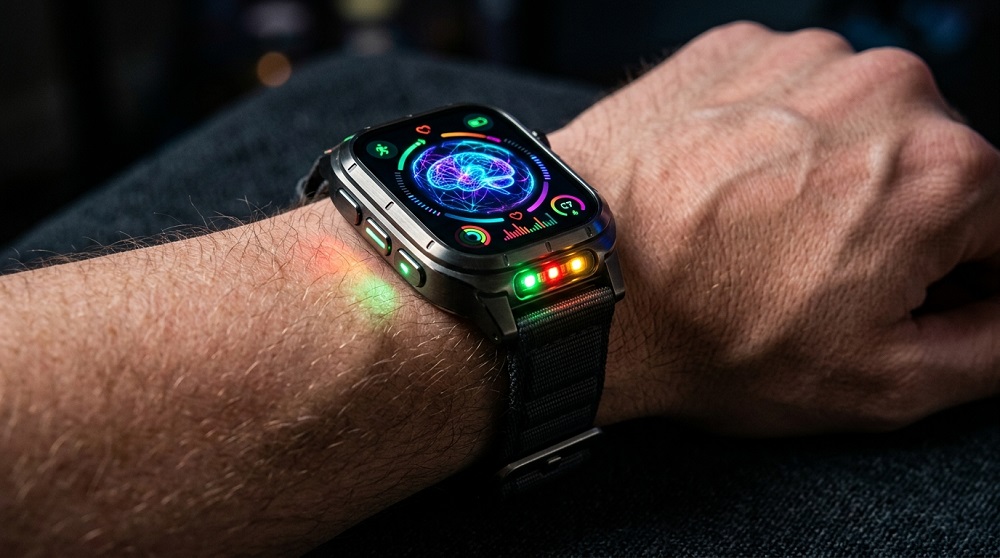
Wearable devices increasingly use AI to interpret raw sensor data — heart rate variability, sleep patterns, movement — into meaningful insights rather than just numbers. Some tools now flag irregular patterns worth discussing with a doctor, extending AI’s role from convenience into genuine early-warning utility.
A Gradual, Cumulative Shift
Few of these changes arrived as a single dramatic announcement. Instead, AI has steadily made existing technology faster, more responsive, and more personalised, one incremental update at a time. The result is a version of everyday technology that quietly does more than it did even a few years ago — largely without most users ever having to think about the AI making it possible.