- Key Takeaways
- Table of Contents
- Why Restroom Planning Matters
- Estimating Restroom Capacity
- Outdoor Event Planning in South Carolina
- Example: A South Carolina Community Festival
- Construction Site Planning
- Accessibility and Inclusive Site Design
- Handwashing and Hygiene
- Placement, Cleaning, and Service Access
- South Carolina Weather and Seasonal Concerns
- A Simple South Carolina Restroom Planning Checklist
- Final Planning Tips
Key Takeaways
- Start restroom planning with attendance or crew size, operating hours, site layout, and expected peak use.
- South Carolina festivals, weddings, job sites, and waterfront gatherings can have very different sanitation needs.
- Accessible units, handwashing options, and service access belong in the first site plan.
- Rain, heat, soft ground, and hurricane-season weather can affect placement and servicing.
- Early coordination helps prevent lines, supply problems, blocked access, and last-minute changes.
Table of Contents
- Why Restroom Planning Matters
- Estimating Restroom Capacity
- Outdoor Event Planning in South Carolina
- Construction Site Planning
- Accessibility and Inclusive Site Design
- Handwashing and Hygiene
- Placement, Cleaning, and Service Access
- South Carolina Weather and Seasonal Concerns
- A Simple South Carolina Restroom Planning Checklist
- Final Planning Tips
Whether the setting is a Lowcountry wedding, a Columbia community fair, a Myrtle Beach sporting event, or a growing construction project in Greenville, restroom access is a practical part of keeping people comfortable and sites organized. Working with a reliable portable toilet supplier in South Carolina early gives planners time to match the equipment, location, and service schedule to real site conditions.
South Carolina locations often bring planning variables that deserve attention before delivery day. Summer heat can increase demand for handwashing supplies, sudden rain can soften grass and dirt access routes, and coastal wind can affect temporary-event layouts. A thoughtful plan accounts for those conditions instead of treating restroom placement as an afterthought.
Construction managers in South Carolina need a plan that can change as crews, phases, and work areas change. Arranging portable toilet hire for building site work early can help ensure that sanitation facilities remain convenient as the project footprint expands or shifts.
Why Restroom Planning Matters
Reliable restroom access supports guest comfort, worker productivity, hygiene, and orderly traffic flow. Too few units can create lines around busy periods, while poor placement can send people across parking areas, through work zones, or near food service. A four-hour school fundraiser may need a simple short-term setup, while a six-month commercial build requires recurring service, supply checks, and room for trucks to reach the units.
Before finalizing a plan, confirm venue rules, municipal requirements, event permits, and any conditions set by the property owner. Public parks, farms, private venues, downtown streets, and active job sites can each have different access limitations.
Estimating Restroom Capacity
There is no universal unit count that fits every South Carolina event or project. Use the following questions to build a practical starting point:
- How many guests, workers, vendors, volunteers, and staff will be on site?
- How many hours will they stay, and when will demand be highest?
- Will food, beverages, or alcohol be served?
- Are permanent restrooms available, open, and close enough to use?
- Will the site host multiple activity areas that need separate restroom access?
- For longer projects, how often will units need cleaning and restocking?
Plan for peak periods rather than average use alone. A concert intermission, lunch break, tournament changeover, or festival headline act can concentrate demand in a short window.
Outdoor Event Planning in South Carolina
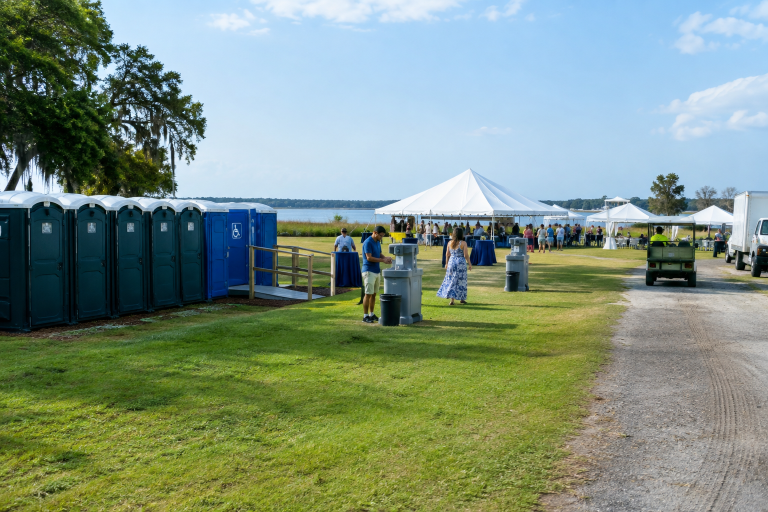
Outdoor events across South Carolina range from oyster roasts and church homecomings to county fairs, races, concerts, and backyard weddings. Place units close enough to be easy to find, but keep them clear of entrances, emergency lanes, dining areas, and food preparation spaces. Handwashing stations are especially useful near restrooms and food vendors.
Example: A South Carolina Community Festival
A weekend festival with a stage, children’s area, vendor row, and food court should avoid placing every unit in one location. Dividing capacity among the entrance, central activity zone, food area, and staff section can reduce unnecessary walking and spread out lines. Formal celebrations throughout South Carolina may also benefit from restroom trailers or upgraded units when the event experience calls for additional interior space and amenities.
Construction Site Planning
Construction restroom planning in South Carolina should follow the active crew, not simply the project’s original headcount. When additional trades arrive or separate work zones open, restroom capacity and placement may need adjustment. Units should be close enough for practical use while remaining outside vehicle routes, excavation hazards, material staging areas, and equipment swing zones.
Federal construction sanitation rules address toilet facilities, potable water, and washing facilities. Project leaders can review OSHA sanitation standards for construction jobsites while also checking applicable South Carolina state and local requirements. Service planning should cover waste removal, toilet paper, hand-cleaning supplies, and access for the service vehicle.
Accessibility and Inclusive Site Design
Accessible restroom options should be included at the beginning of the plan, not squeezed into an unusable corner later. Choose level ground and maintain a clear path from parking, gathering areas, or work locations. Avoid placing accessible units behind fencing, over soft mud, on steep grades, or where parked vehicles can block the entrance.
For public-facing events in South Carolina, organizers should consider applicable accessibility obligations and review the ADA Standards for Accessible Design when evaluating accessible routes and facilities. Site-specific conditions and event type can affect what is required, so organizers should verify requirements for their location.
Handwashing and Hygiene
Hand sanitizer can be useful, but it does not replace a well-planned handwashing setup in every setting. Stations should be stocked with water, soap, paper towels, and a nearby waste container when appropriate. They are particularly important near food service, dusty work zones, and areas where guests or workers handle shared equipment.
Assign someone to check supplies throughout a busy event, especially during South Carolina’s warm weather. On job sites, include hygiene checks in the regular site-management routine rather than waiting for complaints.
Placement, Cleaning, and Service Access
Choose stable, reasonably level ground that stays clear of standing water. Leave an open route for delivery and pumping trucks, and do not allow tents, vehicles, fencing, or stored materials to block that route. Good placement also keeps units visible without putting them directly beside dining tables or food preparation areas.
- Single-day events may need delivery, setup, and pickup coordination.
- Multi-day events may require interim cleaning and supply restocking.
- Long-term projects need a recurring service schedule that can change with crew size and weather.
South Carolina Weather and Seasonal Concerns
South Carolina’s climate brings specific planning considerations. Rain can turn grass fields, sandy lots, and unpaved job-site entrances into difficult access areas. Summer heat can increase odors and speed up supply use, while coastal storms and strong winds may require an alternate placement plan. Evening events also need safe lighting around walkways without creating cords or equipment hazards.
Check the forecast before delivery, identify a firm backup location, and keep emergency routes clear. During cooler months, reduced daylight and slippery surfaces after rain still deserve attention, even when temperatures are mild.
A Simple South Carolina Restroom Planning Checklist
- Event or project address and exact operating dates
- Expected attendance, crew count, vendors, and staff
- Daily hours and peak-use periods
- Food, beverage, and alcohol service details
- Accessible restroom and route needs
- Handwashing station locations
- Ground condition and delivery-truck access
- Cleaning, restocking, and pickup schedule
- Rain, wind, heat, and nighttime backup plans
- Venue, permit, and local sanitation requirements
Final Planning Tips
The best restroom plans fit the actual South Carolina site, the people using it, and the conditions expected throughout the event or project. Plan capacity, accessibility, hygiene, placement, servicing, and weather response together. When those details are handled before the first guest arrives or the first crew starts work, temporary sanitation becomes one less issue competing for attention.