- Key Takeaways
- Why Room Function Should Guide Material Choice
- Compare Common Stone Surface Materials
- Granite
- Quartzite
- Marble
- Limestone, Travertine, and Slate
- Porcelain Slabs and Stone-Look Surfaces
- Best Surface Choices by Room
- Kitchens and Home Bars
- Bathroom Vanities, Showers, and Baths
- Fireplaces and Feature Walls
- Outdoor Kitchens and Patios
- Choose the Right Finish, Color, and Layout
- Plan for Fabrication, Installation, and Care
- Conclusion
Key Takeaways
-
Choose a surface based on how the room is used, not just its color or pattern.
-
Heat, moisture, acids, scratches, sunlight, and foot traffic all affect the choice of material.
-
Granite, quartzite, marble, limestone, travertine, slate, and porcelain each have different strengths.
-
Finish, fabrication, support, waterproofing, and drainage can be as important as the slab itself.
-
A realistic cleaning and maintenance routine helps protect the finished investment.
Choosing a stone surface for a Lakemoor home involves more than matching a cabinet color or finding a dramatic pattern. A kitchen island, vanity top, fireplace surround, patio, and shower floor each face different conditions, so the best material is the one that balances appearance with daily performance. Homeowners comparing quartz countertops in Lakemoor, IL can use the same practical approach when considering natural stone, porcelain slabs, and stone-look materials for other rooms. Local conditions deserve attention, especially for exterior projects. Northern Illinois experiences seasonal temperature changes, frost, snow, rain, and periods of summer heat. The climate of Illinois includes cold winters and a relatively short frost-free season in the northern part of the state, making exterior drainage, material suitability, and installation details important considerations for patios and outdoor kitchens.
Why Room Function Should Guide Material Choice
A countertop that performs well beside a cooktop may not be the safest choice for a wet shower floor. Likewise, a polished surface that looks refined on a bathroom vanity may show water spots or become slippery in an entryway. Before selecting a slab or tile, consider what comes into contact with the surface each day: hot pans, food acids, cosmetics, standing water, grease, muddy shoes, or direct sun. For many Lakemoor remodeling projects, a durable material in a high-use area can simplify daily life. At the same time, a more delicate stone can be reserved for a feature wall, low-traffic powder room, or fireplace surround. This room-by-room mindset creates a more intentional design and helps prevent disappointment after installation.
Compare Common Stone Surface Materials
Granite
Granite is a natural stone often chosen for busy kitchens because it handles normal countertop heat and everyday wear well. Its visual variation is part of its appeal, but homeowners should view the actual slab before approving a selection. Samples may not reveal the movement, mineral flecks, or color shifts across a full island.
Quartzite
Quartzite is a natural stone, not the same product as engineered quartz. It is often selected for its hardness and marble-like movement, making it a strong candidate for hardworking counters when the specific slab is properly fabricated and sealed as needed. Confirm the exact material with the supplier, since commercial stone names can sometimes be confusing.
Marble
Marble offers distinctive veining and a classic appearance, but it can scratch and etch when exposed to acidic liquids such as lemon juice or vinegar. That does not make it a poor choice. It makes marble a better fit for homeowners who appreciate a lived-in patina or who plan to use it in lower-impact locations.
Limestone, Travertine, and Slate
Limestone and travertine bring warm, natural color to bathrooms, fireplace surrounds, walls, and covered outdoor areas, but they benefit from thoughtful sealing and prompt cleanup of spills. Marble and limestone are calcium carbonate stones, and the differences between them help explain why their composition and porosity should be considered when selecting. Slate has a more textured, earthy character that can work well for floors, entryways, and patios where traction matters, though texture may require more detailed cleaning.
Porcelain Slabs and Stone-Look Surfaces
Large-format porcelain can recreate the appearance of marble, limestone, concrete, and slate while offering low water absorption and good stain resistance. It can be useful in showers, walls, kitchens, and exterior settings when the product is rated for the application. Large panels require careful handling, precise cuts, and experienced installation because they can be difficult to transport and position.
Best Surface Choices by Room
Kitchens and Home Bars
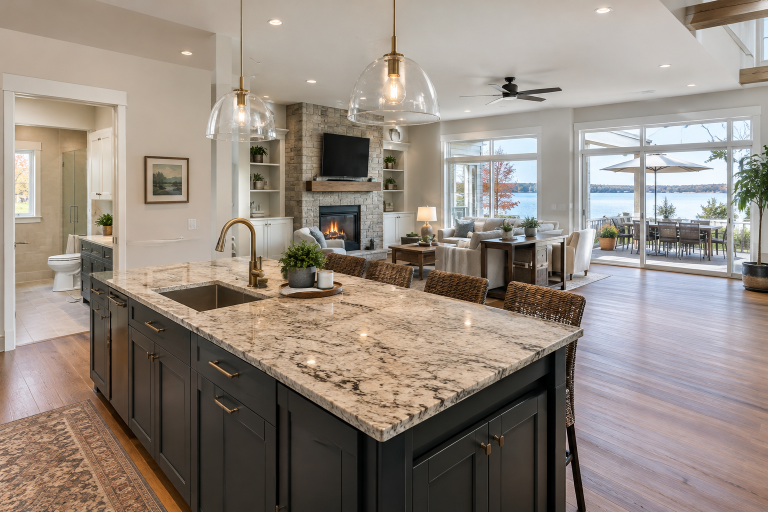
In kitchens, prioritize resistance to routine spills, heat, scratches, and food preparation. Granite and quartzite are often practical choices for active work areas, while marble can create an elegant baking station or bar top for owners comfortable with visible wear. Review seams, sink cutouts, cooktop openings, overhangs, and required support before fabrication begins.
Bathroom Vanities, Showers, and Baths
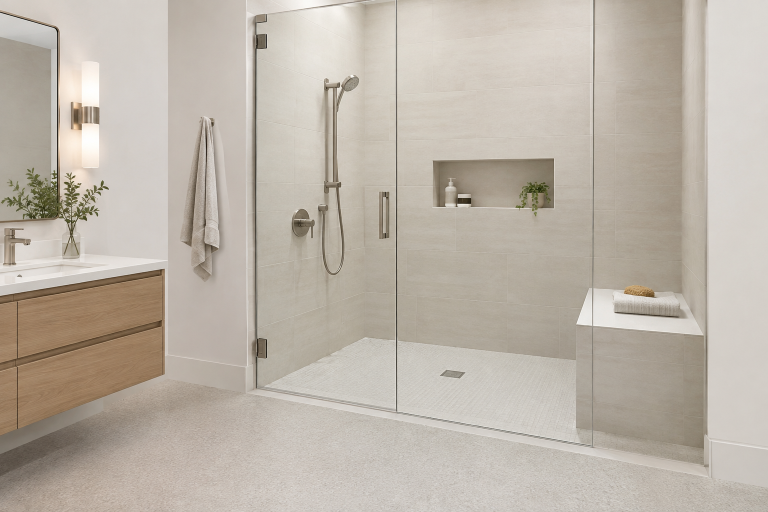
Vanities are exposed to water, soap, toothpaste, cosmetics, and frequent cleaning. Polished finishes reflect light but can show water marks, while honed and matte finishes create a softer look. In showers, finish and waterproofing matter more than appearance alone. Textured or honed materials may provide better traction than highly polished surfaces, but no finish can replace a properly designed waterproofing system, sound substrate, and well-maintained grout or sealant.
Fireplaces and Feature Walls
A fireplace surround can support a bold slab with dramatic veining or a quieter material that blends into the room. Confirm clearances, hearth dimensions, seam locations, and applicable installation requirements before selecting stone. The final design should feel proportional to the fireplace, ceiling height, and nearby furnishings.
Outdoor Kitchens and Patios
Exterior spaces in Lakemoor must manage rain, sun, grease, snow, and freeze-thaw conditions. Do not assume that an indoor countertop or tile is appropriate for outdoor use. Confirm that the selected material, adhesive, grout, sealant, and installation system are intended for exterior exposure. A slight slope for drainage and suitable expansion detailing can be just as important as the surface itself.
Choose the Right Finish, Color, and Layout
-
Polished: Bright and reflective, often best for counters and decorative walls.
-
Honed: Low sheen with a softer, more relaxed appearance.
-
Leathered: Light texture that can add depth and help disguise small marks.
-
Flamed or textured: Often considered for exterior areas and floors where traction is a priority.
View full slabs whenever possible, then examine them in morning, afternoon, and evening light. Vein direction can change the appearance of an island, fireplace, or shower wall. Coordinate the selected surface with cabinet undertones, flooring, hardware, paint, and the room’s natural light.
Plan for Fabrication, Installation, and Care
-
Confirm final measurements before ordering.
-
Review slab layout, seam placement, edge profiles, and cutouts.
-
Verify support for overhangs, heavy sections, and wall panels.
-
Address waterproofing, drainage, substrate preparation, and expansion needs before installation.
-
Use cleaners approved for the selected material and wipe acidic, oily, or deeply colored spills promptly.
-
Ask whether sealing is recommended and how to monitor the surface over time.
Conclusion
The best stone surface for a Lakemoor home is not necessarily the most expensive, rare, or visually dramatic option. Instead, it is the material that best suits the intended space, local environmental conditions, household routines, maintenance preferences, and overall installation plan. Homeowners should consider practical factors such as durability, porosity, resistance to stains and scratches, moisture exposure, and the amount of routine care each surface requires. For example, a kitchen countertop may need to withstand frequent food preparation and spills, while a bathroom vanity or fireplace surround may have different functional and design requirements. Outdoor applications also call for careful consideration of temperature changes, weather exposure, and the material’s suitability for exterior use. Color, veining, texture, and finish should complement the home’s existing features without overshadowing its overall design. It is equally important to discuss fabrication, sealing, installation requirements, and long-term maintenance with a qualified stone professional before making a final selection. By evaluating performance alongside appearance and cost, Lakemoor homeowners can choose stone surfaces that support everyday use while creating attractive, functional spaces that remain appealing for years to come.