Moving day can feel a little like sending your belongings on an obstacle course. Boxes get stacked, shifted, loaded onto trucks, driven across town—or across the country—and then unloaded all over again. For sturdy items like books or blankets, that’s usually not a problem. But for fragile belongings such as glassware, electronics, artwork, and family heirlooms, the journey can be nerve-racking.
Many homeowners assume that if an item is placed in a box, it’s protected. Unfortunately, that’s not always true. Most moving damage occurs because items are packed incorrectly, leaving empty spaces that allow belongings to shift, collide, or absorb impacts during transport.
Think of fragile items like eggs in a carton. The carton doesn’t protect the eggs because it’s strong. It protects them because each egg is supported and prevented from moving around. The same principle applies when packing delicate belongings for a move.
The good news is that protecting fragile items isn’t complicated once you understand the right techniques. Whether you’re packing wine glasses, televisions, framed artwork, or treasured keepsakes, a little extra preparation can make the difference between arriving with everything intact or opening boxes full of disappointment.
Here’s how homeowners can safely pack fragile items like a pro and why many people rely on experienced professional movers when transporting their most valuable possessions.
Start with the Right Packing Materials
Before packing a single item, it’s important to gather quality supplies.
One of the biggest mistakes people make during a move is using whatever boxes happen to be available. While free boxes can work for some household goods, fragile items deserve stronger protection. A worn-out box with weak corners may fail under pressure, even if the contents are wrapped carefully.
Packing fragile belongings successfully starts with creating multiple layers of protection. The outer box serves as the first layer, while cushioning materials absorb shock and prevent movement inside.
For glassware and dishware, sturdy moving boxes designed for kitchen items provide far more protection than standard cardboard containers. Electronics often benefit from their original packaging if it’s still available, since manufacturers design those boxes specifically to protect delicate equipment. Artwork and mirrors typically require specialty picture boxes that can accommodate unusual dimensions while reducing movement.
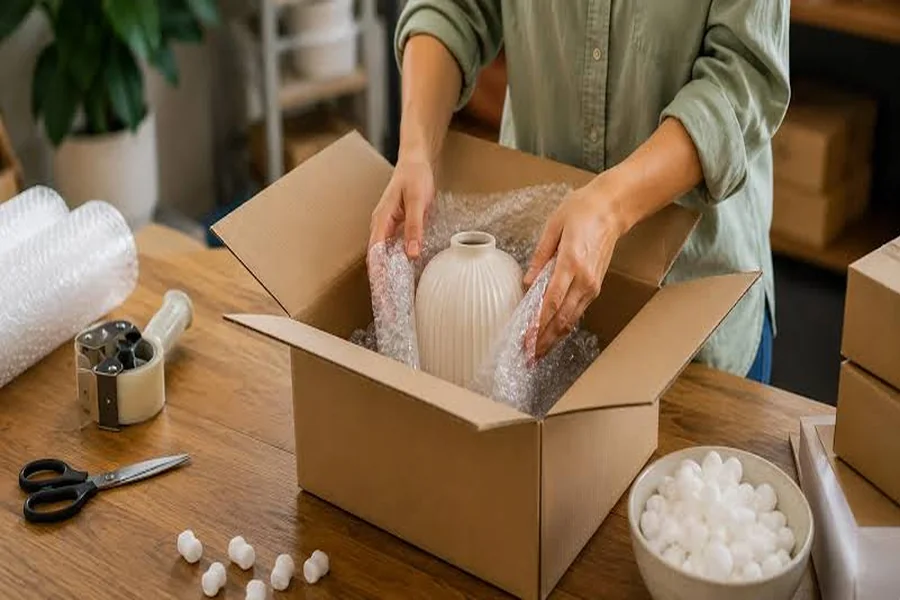
Equally important is the cushioning material used inside each box. Packing paper, bubble wrap, foam sheets, and moving blankets all serve different purposes. Packing paper works well for wrapping individual items and filling small gaps. Bubble wrap creates shock absorption around fragile surfaces. Foam sheets help prevent scratches, while moving blankets add another layer of protection for larger objects.
Think of packing materials as the safety equipment for your belongings. Just as a football player wears pads and a helmet, fragile items need multiple layers of protection before entering the moving truck.
How to Pack Glassware and Dishes Safely
Glassware is often the first category people worry about during a move, and for good reason.
Wine glasses, drinking glasses, dishes, and decorative glass pieces can crack surprisingly easily when packed incorrectly. The key is understanding that the goal isn’t simply wrapping the item—it’s preventing movement. Start by wrapping each glass individually with packing paper. Once the entire surface is covered, add a layer of bubble wrap around particularly delicate pieces. Stemware deserves special attention because stems are often the weakest point and the most likely area to break.
When placing glasses inside a box, position them upright whenever possible. Many people assume glasses should be laid on their sides, but standing them upright often allows them to better withstand pressure during transportation.
Dishes should be packed vertically rather than stacked flat. While this may seem counterintuitive, dishes transported on their edges tend to absorb vibrations more effectively and experience less stress than dishes stacked horizontally.
As each item is placed in the box, add cushioning material between pieces and along the sides of the container. Once the box is full, gently shake it. If anything shifts, add additional packing material until movement is eliminated.
The last step is sealing the box securely and clearly labeling it as fragile. While labels alone won’t prevent damage, they do provide an important reminder that extra care is needed during handling.
How to Protect Electronics During a Move
Current homes possess thousands of dollars’ worth of electronics, from televisions and gaming systems to computers, speakers, and smart home devices.
Electronics present unique challenges because damage isn’t always visible. A television screen may survive the move without a scratch, yet internal components can suffer damage if the unit experiences excessive vibration or impact.
Before disconnecting electronics, take photos of cable connections. This superficial step can save hours of frustration when it’s time to reconnect everything in the new home.
Whenever possible, use original manufacturer packaging. Original boxes are specifically engineered to support the product and absorb impacts. If those boxes are no longer available, choose a sturdy replacement box that provides enough room for protective cushioning.
Televisions deserve special attention. Flat-screen TVs should remain upright during transport rather than lying flat. The weight distribution of the screen can create pressure points that increase the risk of damage when positioned horizontally.
For computers, gaming systems, and other devices, remove detachable accessories and pack them separately. Cords, remotes, and small components should be labeled clearly to make unpacking easier.
Moisture is another concern with electronics. Even if rain isn’t expected, it’s wise to place sensitive devices inside protective plastic coverings before packing them into boxes.
Many homeowners choose to have professional movers handle expensive electronics because trained crews understand how to secure these items safely within the moving truck and minimize movement during transportation.
How to Pack Artwork, Mirrors, and Decorative Pieces
Artwork and decorative items often carry more than monetary value. Many pieces have sentimental significance that makes damage especially upsetting.
Packing artwork successfully begins with protecting the surface itself. Glass-covered artwork should be secured carefully to prevent shattered glass from damaging the underlying piece if an accident occurs.
A common technique involves applying protective tape across the glass in a crisscross pattern. This doesn’t prevent breakage, but it can help contain shattered pieces if the glass cracks during transport.
After protecting the surface, wrap the artwork in packing paper followed by bubble wrap. Corner protectors add another valuable layer of defense because corners frequently absorb impacts during loading and unloading.
Framed artwork should then be placed inside specialty picture boxes whenever possible. These boxes are designed to minimize movement and provide extra support for large, flat items.
Mirrors require similar treatment. Because mirrors can be particularly vulnerable to pressure and impact, extra cushioning is usually worth the investment.
Decorative sculptures, collectibles, and fragile keepsakes should be wrapped separately and packed in appropriately sized boxes. Avoid placing multiple fragile objects directly against one another. Every item should have its own protective barrier.
When transporting valuable artwork or antiques, many homeowners depend on professional movers who have ample experience handling delicate, high-value belongings that require specialized packing methods.
The Most Common Packing Mistakes That Cause Damage
Even people who pack carefully can make mistakes that increase the risk of breakage.
One of the most common errors is overpacking boxes. A box that is too heavy becomes difficult to carry safely and places additional stress on its contents. Fragile items should never be packed so tightly that pressure builds between them.
Another frequent mistake is underpacking. Empty space inside a box allows items to shift during transportation. Every gap creates an opportunity for movement, which increases the likelihood of damage.
Some homeowners also underestimate the importance of box quality. Weak or damaged boxes may fail unexpectedly, even if the contents are wrapped properly.
Labeling mistakes can contribute to problems as well. A box containing fragile glassware may be stacked beneath heavier boxes if handlers don’t realize what’s inside.
Perhaps the biggest mistake of all is waiting until the last minute. Rushed packing often leads to shortcuts, and shortcuts frequently lead to broken belongings.
The safest moves are usually the most organized ones. Giving yourself adequate time allows you to pack thoughtfully and ensure every item receives the protection it needs.
Protect Your Belongings Before Moving Day Arrives
Packing fragile belongings doesn’t have to feel overwhelming. Once you understand the principles behind safe packing—using quality materials, preventing movement, and creating multiple layers of protection—the process becomes much more manageable.
Whether you’re wrapping wine glasses, securing electronics, or protecting family artwork, the goal remains the same: reduce movement and absorb impact before damage can occur.
A bit of extra effort before moving day can save significant frustration later. Broken belongings are often the result of rushed packing, insufficient cushioning, or inadequate boxes. Taking the time to pack properly dramatically improves the odds that everything arrives safely.
For homeowners preparing for a move, working with experienced professional movers can provide additional peace of mind. Their expertise, specialized equipment, and proven packing techniques help protect fragile items throughout every stage of the moving process.
If you’re planning an upcoming move, consider partnering with trusted professional movers who can help safeguard your most valuable belongings and ensure they arrive at your new home in the same condition they left the old one.